 Vincere
You’ve just done it. You finally finished that online course, hit a new personal best at the gym, or managed to stick to your new morning routine for a full week. There’s a quiet hum of triumph in your chest, a deep satisfaction in knowing you showed up for yourself. You reach for your phone, a fleeting urge to share this small victory… and then you pause.
Who would truly get it?
Your oldest friends might offer a half-hearted "Good for you" before changing the subject to last night's drama. Your family might ask why you're "working so hard" when you could be relaxing. The people you used to share everything with? They’re still living the life you’re trying to move beyond, and sharing your new path often feels like speaking a foreign language.
That specific pang you feel? That’s the ache of lonely working on yourself. It’s not just general loneliness; it’s a unique blend of pride and isolation, a bittersweet reminder that as you grow, sometimes you outgrow the very connections that once felt like home.
Why Self-Improvement Can Make You Feel So Alone
This isn't a sign that you're doing something wrong. In fact, it's often a sign that you're doing something very, very right. When you commit to changing your life, your values, routines, and priorities inevitably shift.
Here’s why that shift can lead to feeling profoundly alone:
You're Outgrowing Old Connections (And That's Okay)
Think of it like this: if you start eating healthier, you might find nights out with friends centered around greasy food and late-night drinking less appealing. If you’re pursuing a new career path, conversations about your old job might feel… irrelevant. As you evolve, the common ground with some people naturally shrinks. It’s not a judgment on them, or on you. It’s simply different paths diverging.
This doesn't mean those old friendships disappear entirely, but the dynamic changes. And sometimes, you might even grieve the loss of those easy, unburdened connections. That’s a valid feeling.
No One Supports My Goals (Or They Don’t Seem To)
It’s easy to feel like no one supports your goals when they don't celebrate them in the way you need. Perhaps your efforts aren't understood. To an outsider, your commitment to learning a new skill might look like you're "always busy." Your decision to cut down on social media might be seen as "antisocial."
Often, this isn't active sabotage, but a lack of shared context. They haven’t experienced your journey, so they can’t fully grasp the significance of your small, hard-won victories. They might even feel indirectly challenged by your changes, leading to subtle negativity or dismissiveness.
The Invisible Nature of Inner Work
Much of self-improvement happens internally. It’s the mental discipline, the emotional resilience, the quiet perseverance. You can’t put a photo of "not procrastinating today" or "managing my anxiety better" on social media. The effort is often unseen, and therefore, unvalidated. When your hard work remains invisible, it’s hard for others to cheer you on, leaving you feeling lonely when changing your life.
Feeling isolated on your self-improvement journey? Find your crew and share your wins privately with Vincere.
Try Vincere free Scan with
your iPhone
How to Bridge the Gap: Finding Your Quiet Crew
The antidote to lonely working on yourself isn't necessarily a massive social overhaul. It’s about quality over quantity. You don't need everyone to understand; you just need someone who gets it. One or two people can make all the difference.
1. Identify Your "Anchor" People (Or Seek New Ones)
Look around. Is there anyone in your existing circle who: * Asks about your goals with genuine interest? Not just a polite "How's that going?" but truly listens to your answer. * Celebrates your small wins without judgment? Even a simple "That's awesome!" or "I know how hard you worked for that." * Is on a similar journey themselves? Even if it’s a different goal, the shared experience of self-improvement creates powerful empathy.
If you don't immediately see someone, start looking for connections in new places: a class, a hobby group, an online community focused on your niche interest. You might be surprised where you find your people.
2. Communicate Your Needs (Even If It Feels Awkward)
Often, people don't know how to support you because you haven't told them what kind of support you need. It might feel vulnerable, but a simple conversation can go a long way.
- "Hey, I'm really trying to stick to this new running habit, and it's tough sometimes. Would you mind if I checked in with you occasionally, just to say I showed up?"
- "I'm working on a big project, and I'd love to have someone I can share small updates with, good or bad, who won't just tell me I'm crazy."
Be specific. Do you need an accountability partner? Someone to vent to? A cheerleader? A listening ear? People are often more willing to help when they know how. If you need guidance on finding the right person, our article, "Choosing an Accountability Partner App That Actually Works," offers practical tips.
3. Set Gentle Boundaries with Unsupportive Connections
You don't need to cut people out of your life, but you can adjust the dose. If certain friends consistently derail your efforts or leave you feeling drained, consider: * Changing the activity: Instead of a long night of drinking, suggest a walk or a coffee. * Limiting the topic: Politely steer conversations away from areas that trigger negativity or doubt. * Reducing frequency: Spend less time with those who don’t uplift you, and more time with those who do.
Remember, protecting your energy and your path is a crucial act of self-care, not selfishness.
4. Embrace the Power of Showing Up (Even Privately)
Sometimes, the best support is simply the quiet acknowledgement that you showed up for yourself, even when no one else was watching. This is where tools can become powerful allies.
Imagine having a private space where you can check off your habits or tasks, not for public applause, but for the quiet satisfaction of seeing your own progress. A place where you can share that proof with a chosen few who genuinely care, without the pressure of a public feed.
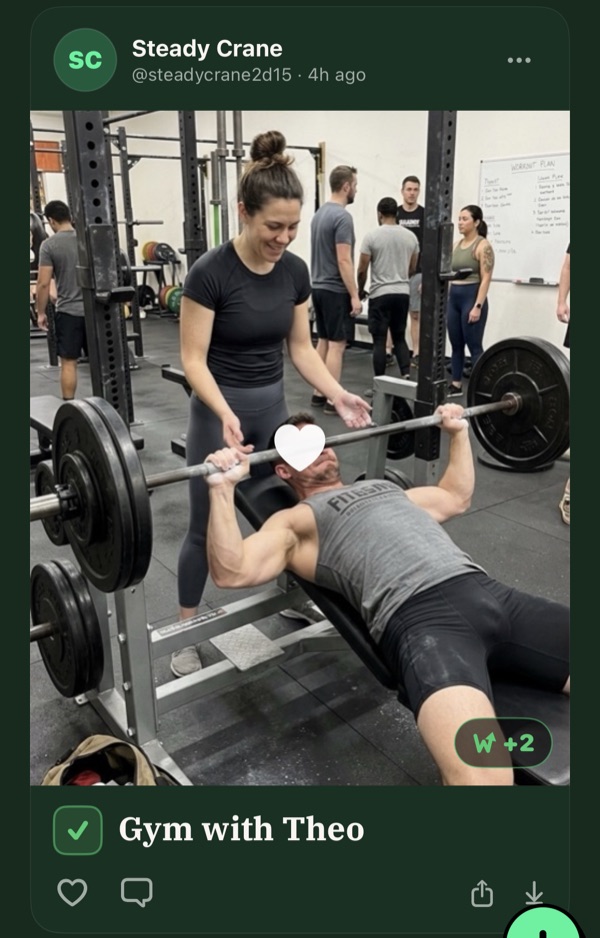
This is precisely what Vincere offers. It's a free iPhone app designed for building habits with a crew. You can share tasks and habits with up to two friends in the free version (unlimited with Premium). Everyone in your crew sees who showed up today. When you check off a task, you earn a 'W' (a win). If you add a proof photo – say, a picture of your finished workout or a screenshot of your completed study session – you earn 2 'W's. This is all private by default, and you pick the audience for your proof photos: just you, your followers, your habit crew, or everyone. Critically, there's no public social feed or follower timeline; your progress is shared only with the friends you specifically invite to your crew. It’s not about likes or public validation, but about quiet, shared accountability.
This discrete method of sharing your journey can help alleviate the feeling that "no one supports my goals" by providing a structured, low-pressure way for a select few to see your effort. It turns invisible work into visible, celebrated wins within your trusted circle.
Vincere also includes Vince, an AI coach that plans your week and provides morning and evening check-ins, offering another layer of personalized support when a human crew member isn't available.
Ready to build habits with someone who gets it? Invite a friend to your private habit crew on Vincere and celebrate showing up.
Get Vincere on the App StoreScan withyour iPhone
A Tiny Move Today
The feeling of loneliness on your self-improvement path is valid, but it doesn't have to be permanent. Remember, you're not failing; you're evolving. The path to a better you often means finding a new kind of support.
Today, pick one tiny action: 1. Identify one person you could tentatively share a small win or struggle with this week. 2. Download Vincere and invite one trusted friend to share a new habit, even if it’s just drinking more water or reading for 10 minutes a day. See how the simple act of checking off your progress, knowing someone else sees it, quietly shifts your perspective.
If the feeling of loneliness feels overwhelming, or if you find yourself struggling with persistent sadness or hopelessness, please know that it's okay, and important, to reach out for professional help. A doctor, therapist, or a local crisis line can provide the support you need. Your mental well-being is paramount.
You are doing the brave work of becoming. And you don’t have to do it completely alone.