 Vincere
It hits you sometimes like a sudden, cold wave. One minute you’re thinking about dinner, the next you remember the pile of laundry, the unopened emails, that thing you promised your friend, the looming deadline at work, the cluttered countertop, and the faint, gnawing thought that you haven’t truly relaxed in weeks.
Your brain tries to process it all, and then, a funny thing happens: it short-circuits. Instead of springing into action, you freeze. You stare blankly at your screen, scroll aimlessly, or just sit there, feeling the weight of everything.
That heavy, sinking feeling? That’s overwhelm. It’s the brain’s emergency brake, triggered not by a physical threat, but by a mental one: too much information, too many demands, and absolutely no clear path forward. You’re not lazy; you’re literally stuck, overwhelmed and don't know where to start.
You know you have to move, but where? And how? Every potential first step feels like a pebble in an avalanche, destined to be crushed by the sheer volume of what’s coming next. This isn't just frustrating; it’s paralyzing.
Why "Too Much" Freezes You (and What Doesn't Help)
Our brains are incredible, but they have limits. When faced with an enormous, shapeless blob of "things to do," your prefrontal cortex—the part responsible for planning and decision-making—gets overloaded. It sees the mountain, not the path.
Here’s what often makes it worse:
- The "All or Nothing" Trap: You tell yourself you have to finish everything today, or make a perfect plan, or tackle the hardest thing first. When that feels impossible (because it often is), your brain defaults to doing nothing.
- The Mental Juggling Act: Keeping all your tasks, worries, and ideas bouncing around in your head is exhausting. Each mental tab open drains your energy, leaving less for actual execution.
- The "Right" First Step Obsession: You spend so much time trying to figure out the optimal place to start that you never actually start. Perfectionism masquerading as planning.
- Isolation: You wrestle with this feeling alone, convinced you’re the only one who feels so stuck. The quiet struggle makes the mountain feel even bigger.
The key to breaking free isn't more willpower or a sudden burst of motivation. It's about outsmarting your overwhelmed brain with simplicity, structure, and a tiny bit of external support.
Feeling overwhelmed by your to-do list? Get it out of your head and into Vincere with folders and due times, and find your first small step.
Try Vincere free Scan with
your iPhone
Step 1: Get It Out of Your Head, No Matter How Messy
This is the most crucial first move when you don't know where to start. Your brain isn't a storage locker; it's a processing unit. Trying to store all your obligations in it is like trying to run a marathon while carrying all your furniture.
Grab a pen and paper, open a simple notes app, or use a dedicated task manager. Then, for 5-10 minutes, dump everything out. Every chore, every email, every vague worry, every ambitious project idea, every small reminder. Don't organize. Don't censor. Just write it down.
- Laundry
- Call mom back
- Grocery list – need milk
- That weird email from HR
- Figure out vacation dates
- Water plants
- Start novel (yes, even that!)
- Respond to Sarah's text
- Dust shelves
This "brain dump" does two powerful things:
- It externalizes the problem. The vague, swirling blob in your head becomes a concrete list on a page. It's no longer an abstract monster; it's a series of manageable items.
- It frees up cognitive space. Your brain can stop trying to remember everything and start thinking about doing things.
You might feel a tiny wave of panic when you see the sheer volume of your list. That's okay. It’s a temporary discomfort for a long-term gain. Now you have something tangible to work with.
Step 2: Stop Looking for the "Most Important" Thing
This is where most people get stuck after the brain dump. They look at the list and try to prioritize, which often leads back to the "all or nothing" paralysis. Instead, ask yourself a different question:
"What is the single easiest thing on this list that I can do in the next two minutes?"
Not the most impactful. Not the most urgent. Just the easiest.
- Sending that quick email? (e.g., "OK, thanks for the update")
- Putting a dirty dish in the dishwasher?
- Texting your friend back?
- Making one quick note about that vacation idea?
- Filling up your water bottle?
The goal isn't to tackle a huge problem; it's to create motion. To prove to your brain that it can take action. This is the 30-Second Starter – a micro-version of the famous Two-Minute Rule. It’s so small, your brain can barely object.
You’re not trying to clean the whole house; you’re picking up one sock. You’re not writing the whole report; you’re opening the document.
Step 3: Embrace the Power of One Next Step
Once you've done that first tiny thing, you'll feel a subtle shift. A little spark of momentum. Now, repeat the question: "What is the single easiest thing I can do next?"
Keep it small. Keep it achievable. Stack these tiny wins.
- Did you send that quick email? Great. Now, can you delete two old emails?
- Did you put one dish away? Great. Now, can you wipe down the counter?
- Did you text your friend? Great. Now, can you add "call mom" to a task list?
Each tiny win, even a microscopic one, sends a signal to your brain: "I can do this. I am doing this." You're building a bridge of small victories across the chasm of overwhelm.
If you hit a larger task, don't feel pressured to finish it. Just ask: "What's the very first sub-step?" * "Start novel" becomes: "Open a blank document and title it 'Novel Idea.'" * "Figure out vacation dates" becomes: "Open a calendar app."
This process is about momentum, not immediate completion. You're teaching your brain that progress is possible, even when the finish line feels miles away. If you're struggling to make progress on a significant project, you might find some useful tips in our article, Feeling Stuck in Life? The Physics of One Tiny Move.
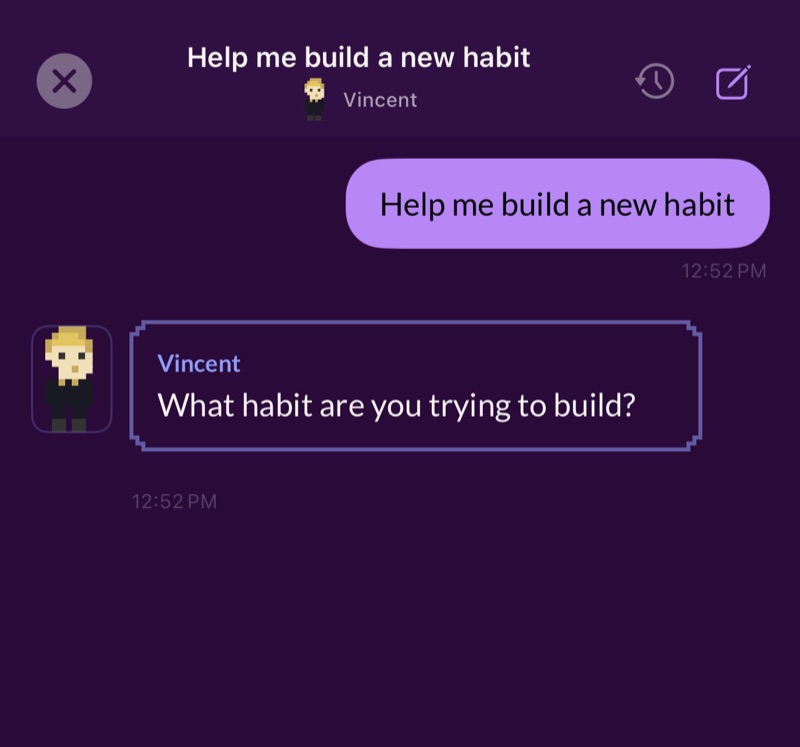
When you don't know where to start, ask Vince! Our AI coach plans your week by conversation and creates tasks, so you can just begin.
Get Vincere on the App StoreScan withyour iPhone
The Social Side of Getting Unstuck
Feeling overwhelmed often thrives in isolation. When you’re stuck, it’s easy to feel alone with your struggle, as if everyone else has it all together. But getting a little external perspective, even just by externalizing your tasks to someone else, can be incredibly powerful.
Think about it: * Vague requests feel overwhelming. If someone asks "Could you help with the presentation?" it feels nebulous. But if they say, "Could you create three slides on Q3 sales data for the presentation by Tuesday?" suddenly it's actionable. * Visibility creates gentle accountability. Knowing someone else sees your intention to act can be the nudge you need.
This is where a little support can truly help. Instead of keeping the entire burden in your head, consider tools that help you share your intention or your first small step with someone you trust.
How Vincere Can Be Your First Step Out of Overwhelm
When you’re overwhelmed and don't know where to start, Vincere is designed to help you get those tasks out of your head and into action.
- Brain Dump to Organized Tasks: Use the app to quickly add every single item from your brain dump. Organize them into folders, assign due times, and break larger tasks into sub-tasks. Just getting it written down and structured can be a huge relief.
- Ask Vince, Your AI Coach: Sometimes, the sheer act of planning is what feels overwhelming. This is where Vince, your AI coach, shines. Chat with Vince about your goals or your chaotic to-do list, and it will help you plan your week by conversation, generating tasks and habits for you. It’s like having a kind, non-judgmental assistant to help you find your starting point.
- Share a Tiny Step: If you have a friend who also uses Vincere, you can share a specific task with them. Not to compete, but just so they see you're trying. Maybe you share "clean one surface in the kitchen." When you check it off and earn a 'W' (a win!), they see it. This low-stakes accountability can be incredibly motivating without adding pressure.
- Focus Timer for Momentum: Once you pick that one small task, use Vincere's focus timer (15, 25, 45, or 60 minutes). It creates a dedicated block of time for you to just do that one thing, free from distractions. Even 15 minutes of focused effort on a single small task can break the paralysis.
The goal isn't to be "productive" all the time, but to feel less trapped by the sheer volume of your life. By externalizing, simplifying, and inviting a bit of support, you can transform that giant, paralyzing blob into a series of achievable, even tiny, actions.
Don’t aim for perfection today. Aim for one small, visible win. That’s enough to change the trajectory of your entire day.
What If I Still Feel Paralyzed?
Sometimes, the feeling of overwhelm goes beyond simply having too many tasks. If you consistently feel paralyzed, exhausted, or unable to find even the smallest spark of motivation, it might be a sign of something deeper. If these feelings are persistent and interfering with your daily life, please consider reaching out to a mental health professional, doctor, or a local crisis line. You don't have to carry this burden alone.
Remember, the goal isn't to clear the mountain in one go. It's to pick up one pebble. Then another. And then, you'll be moving.