 Vincere
You know the feeling. It's 2 AM, and you’re staring at the ceiling, replaying a conversation in your head or outlining the perfect launch for that creative project you've been dreaming about for months. Or maybe it’s 7 AM, and the running shoes are still by the door, the email for that client you want to reach sits in drafts, or the outline for that new skill you want to learn is still just an outline. You care about this thing, deeply. It excites you, scares you, feels like a vital part of who you want to be.
But you don’t start. You scroll instead. You clean the house. You reorganize your inbox. You do anything but begin.
That heavy, dragging weight? That's not laziness. It's often the quiet, creeping fear of failure. It whispers, "What if it's not good enough? What if you look foolish? What if you try your hardest, and it still doesn't work?" And so, to protect yourself from that potential pain, you choose the safest option: you do nothing at all.
When "Scared to Start" Becomes "Never Began"
This isn't about lacking motivation; it's about a protective mechanism gone haywire. We're designed to avoid pain, and our brains can interpret the potential pain of failure—disappointment, judgment, wasted effort—as something to be dodged at all costs. This is why fear of failure procrastination is such a common trap. We tell ourselves we’ll start when we have more time, more resources, or when we feel more "ready," but "ready" rarely arrives.
You're not alone in feeling scared to start. This internal struggle manifests in a few key ways:
- The Inner Critic's Loudest Voice: That voice in your head that insists on perfection. If it's not going to be flawless, why bother? This all-or-nothing thinking paralyses you.
- The Spotlight Effect: We overestimate how much others are paying attention to us and our potential stumbles. We imagine an audience judging our every misstep, even if, in reality, most people are too busy worrying about their own spotlight.
- The Comparison Trap: You see everyone else's highlight reels – their finished products, their successful launches, their amazing transformations. You compare your messy, unstarted beginning to their polished end, and the gap feels insurmountable.
The result? The thing you care about most remains a beautiful, untouched dream, precisely because it means so much to you.
The Quiet Ache of Lonely Self-Improvement
This feeling often grows in isolation. When the dream lives only in your head, the fear is magnified because there's no one to share the burden or challenge the inner critic. It becomes this secret, precious, terrifying thing. When you're afraid of failing and keeping it to yourself, every potential stumble feels like a personal catastrophe. This is where the quiet ache of lonely self-improvement truly sets in. You might even feel a sense of shame about not starting, adding another layer to the paralysis. (If this resonates, you might find comfort in reading about The Quiet Ache of Lonely Self-Improvement.)
But what if failure wasn't a dead end, but a learning opportunity? And what if you didn't have to face it alone?
That big idea stuck in your head? Beat the "scared to start" feeling today. Add your first tiny step as a task in Vincere.
Try Vincere free Scan with
your iPhone
Turning Fear into Forward Motion: Small, Shared Steps
The antidote to the fear of failure isn't to magically stop feeling scared. It's to embrace imperfection and start small, often with a friend.
1. Identify Your Minimum Viable Start
Forget the grand vision for a moment. What is the absolute smallest, most ridiculously easy first step you could take today that moves you even 1% closer to your goal?
- If you want to write a book: Write one sentence.
- If you want to run a marathon: Put on your shoes.
- If you want to launch a business: Brainstorm three possible names.
- If you want to learn guitar: Hold the guitar for 2 minutes.
Make it so small it's impossible to fail, and easy to complete. The goal isn't to finish the project; it's to start and build momentum. This short-circuits the perfectionist's need for a grand opening and shows your brain that starting isn't dangerous.
2. Make Small Public Bets (with the Right Audience)
Sharing your intention with a trusted few can be incredibly powerful, but here's the crucial distinction: we're not talking about broadcasting your every move to the world. That can increase pressure and the fear of judgment. Instead, focus on small public bets with a supportive crew.
This means telling one or two trusted friends or an accountability partner about your tiny first step. Not for their judgment, but for their witness. When someone else knows, it subtly shifts the energy from a secret, terrifying burden to a shared, manageable commitment.
Why "Failing with a Friend" is Actually Winning
The beauty of sharing with a friend is that it redefines "failure." If you "fail" to run for 30 minutes, but you told your friend you'd put on your shoes and you did that, you still started. If you aimed to write a chapter and only wrote a paragraph, but your friend saw you put in the effort, that's not failure; it's progress. They offer encouragement, perspective, and often, the exact push you need to get going again. This turns the fear of failure into an opportunity for collaboration and learning.
Vincere: Your Crew for Imperfect Progress
This is precisely where an app like Vincere can help you overcome the fear of failure. Instead of trying to conquer huge goals alone in your head, Vincere allows you to:
- Share Tasks and Habits with a Crew: You can invite friends to shared habits or assign tasks. They see your check-offs and whether you showed up today. This creates that "small public bet" environment without the pressure of a public social feed. Your friends just see your effort on the specific things you choose to share.
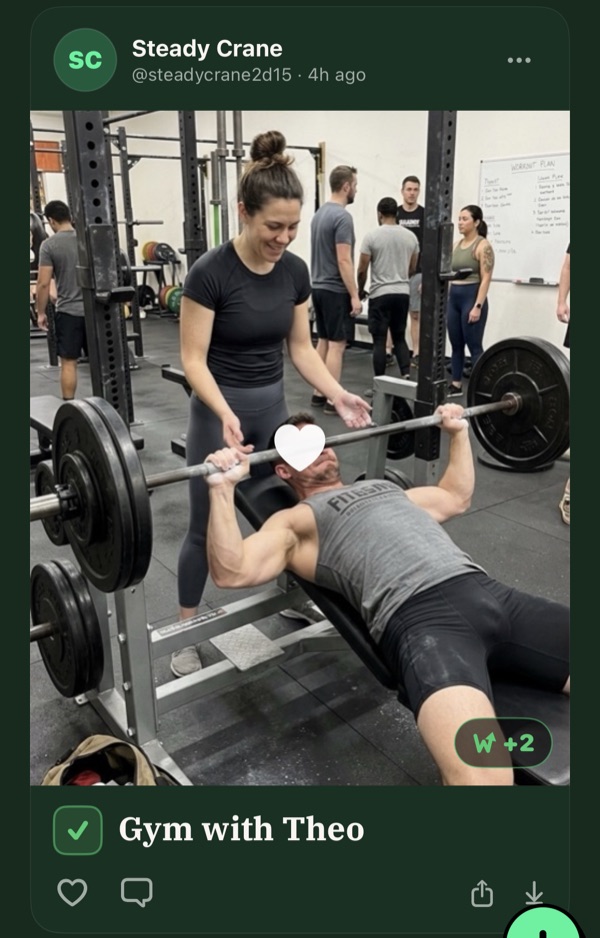
- Proof Photos for Your Crew: Did you do your tiny first step? Snap a photo of your running shoes, your single sentence, or your guitar practice. You pick the audience—just you, or your habit crew. This turns effort into a visible "Win" (2 W's with a photo!), solidifying your progress and letting your crew cheer you on.
- Normalize Misses with W/L Calendar: Vincere tracks your Wins (W) and Losses (L). Missing a day isn't the end of the world; it’s just an L, a data point. It normalizes that not every day will be perfect, taking the sting out of "failure" and helping you get back on track without the shame spiral.
By making your small, imperfect beginnings visible to a supportive friend or two, you chip away at the isolation that feeds the fear of failure. You learn that taking a small step, even if it's not perfect, is a Win.
Tired of failing alone? Share a small, imperfect step as a habit with a friend on Vincere and start building momentum together.
Get Vincere on the App StoreScan withyour iPhone
Your Tiny Next Step Today
Don't let the fear of failure keep your most cherished dreams locked away. You deserve to experience the joy of starting, the satisfaction of trying, and the growth that comes from imperfect action.
- Name that thing you've been avoiding. The one that truly matters.
- Break it down into the smallest possible step you can do today. Seriously, make it ridiculous.
- Tell one trusted friend about your tiny step, or set it up as a shared task in Vincere.
- Just start. For five minutes. For one sentence. For one click.
The fear might not disappear entirely, but its grip will loosen. You'll realize that the true failure isn't trying and stumbling; it's never beginning at all.
And if the weight of this feeling feels too heavy, please remember that it's okay to reach out for professional support. A doctor, therapist, or a local crisis line can provide invaluable guidance.