 Vincere
It is 5:30 on a Tuesday afternoon. You are sitting on the edge of your bed, one sock on, one sock off, staring at the floorboards.
Your gym bag is sitting by the door like a silent accusation. The dishes from breakfast are soaking in lukewarm water. You have four unread work emails that technically need answers before tomorrow morning. Yet your limbs feel as though someone quietly injected them with wet sand. You cannot seem to stand up.
And then the internal voice starts its familiar monologue: Look at you. You haven’t done anything hard today. Why are you feeling lazy and tired all the time? Everyone else is managing their lives, and you can’t even put on your other sock.
Before you swallow that story, pause. What you are feeling right now is miserable, but it is almost certainly not laziness. Laziness is an intentional choice: you have a reservoir of energy, you see a task that matters to you, and you happily decide to shirk it without a second thought.
If you are reading this while marooned on your couch, you aren't lounging happily. You are trapped. You want to move, but the ignition simply isn't catching.
The Difference Between Being Lazy and Being Spent
True laziness rarely exists in people who spend half their evening torturing themselves over what they aren’t doing.
When you find yourself asking, "Why do I feel lazy and weak?", you are usually looking at a dashboard warning light and assuming your car is just morally deficient. In reality, you are dealing with one of two things: acute depletion or protective paralysis.
Depletion is physiological. Maybe you have slept six broken hours a night for two weeks. Maybe your diet has consisted of iced coffee and stress. For many women, feeling lazy during your period or feeling lazy during pregnancy—especially that bone-deep exhaustion common in the first trimester—is not a slump in motivation. It is your biology diverting every spare calorie of glucose toward cell division or hormonal shifts. Your body is running a marathon behind the scenes, leaving barely enough fuel to keep your eyes open.
Protective paralysis, on the other hand, is neurological. When your brain perceives a task as overwhelmingly complex, emotionally fraught, or ripe for failure, it treats that task as a threat. Instead of launching into action, your nervous system initiates a freeze response. You sit immobilized, scrolling mindlessly on your phone, not because the screen is fascinating, but because putting your phone down means confronting the mountain you don't know how to climb.
Calling yourself "lazy" in that moment is a desperate attempt to whip an exhausted horse. It never works. It just drains the tiny bit of energy you had left.
Stuck on the couch right now? Open Vincere, set one tiny five-minute task, and let a friend see you start.
Try Vincere free Scan with
your iPhone
Why the Paralysis Feels Worse in Isolation
There is a strange, quiet irony to physical and mental fatigue: it thrives behind closed doors.
When you are feeling lazy at work or struggling to make dinner, your world narrows down to your own head. In that vacuum, your inner critic becomes the only speaker in the room. You convince yourself that everyone else wakes up at 6:00 a.m. full of natural vigor, glides through their workday, hits the gym, and prepares a balanced meal—all without a moment of hesitation.
You compare your backstage mess to everyone else’s dress rehearsal.
The shame of being "behind" makes you want to hide. You cancel plans, leave texts unanswered, and sink deeper into the cushions. But isolation only amplifies the weight. When no one sees the effort it takes you just to get through the afternoon, the mountain gets taller. Human beings are built for co-regulation; we borrow momentum from each other.
4 Practical Ways to Unfreeze Yourself Today
If you cannot whip yourself into action, how do you actually get off the bed? You don’t do it with a burst of heroic motivation. You do it by lowering the threshold of effort until the friction disappears.
1. Drop the Floor to the Floorboards
When you are feeling lazy to go to the gym, your brain isn't just resisting the gym; it's resisting packing the bag, finding the keys, driving through traffic, finding a locker, working out for an hour, driving home, and showering. That is nine consecutive tasks.
Shrink the requirement down until it sounds almost insulting. Do not "go to the gym." Just put on the other sock and stand outside your front door for sixty seconds. If you still want to crawl back into bed after that, you have permission to do so. Nine times out of ten, breaking the physical state of rest breaks the mental freeze. Action produces energy far more reliably than waiting for energy produces action.
2. Run a Physical Diagnostic
Before you accept the label of laziness, check your engine. * Have you had a glass of water in the last four hours? * Have you eaten a meal with actual protein, or just processed sugar? * Have you looked at natural daylight today? * Is your body fighting off a bug, or managing a hormonal dip?
If your biological basics are flashing red, honor that. You cannot expect high-performance output from an unfueled machine. As we explored when looking at how tiredness and dread masquerade as a lack of discipline, treating physical exhaustion with self-criticism is like shouting at an empty gas tank.
3. Clear the Decision Clutter
Fatigue often isn't muscular; it's decision fatigue. Staring at an untidy living room overwhelms you because your brain is trying to solve thirty spatial problems simultaneously: Where does that book go? Should I fold that laundry? What about the junk mail?
Pick one single metric. Pick up three pieces of trash. Or set a timer for precisely five minutes, wash whatever dishes fit in that window, and stop the moment the bell dings. Limiting the scope reassures your nervous system that it is not being drafted into an endless war.
4. Let Someone Bear Witness
Willpower is an unreliable solitary resource. If you tell yourself you’ll walk around the block, it’s easy to renegotiate with yourself. But if a close friend knows you are trying to make that walk, the friction drops.
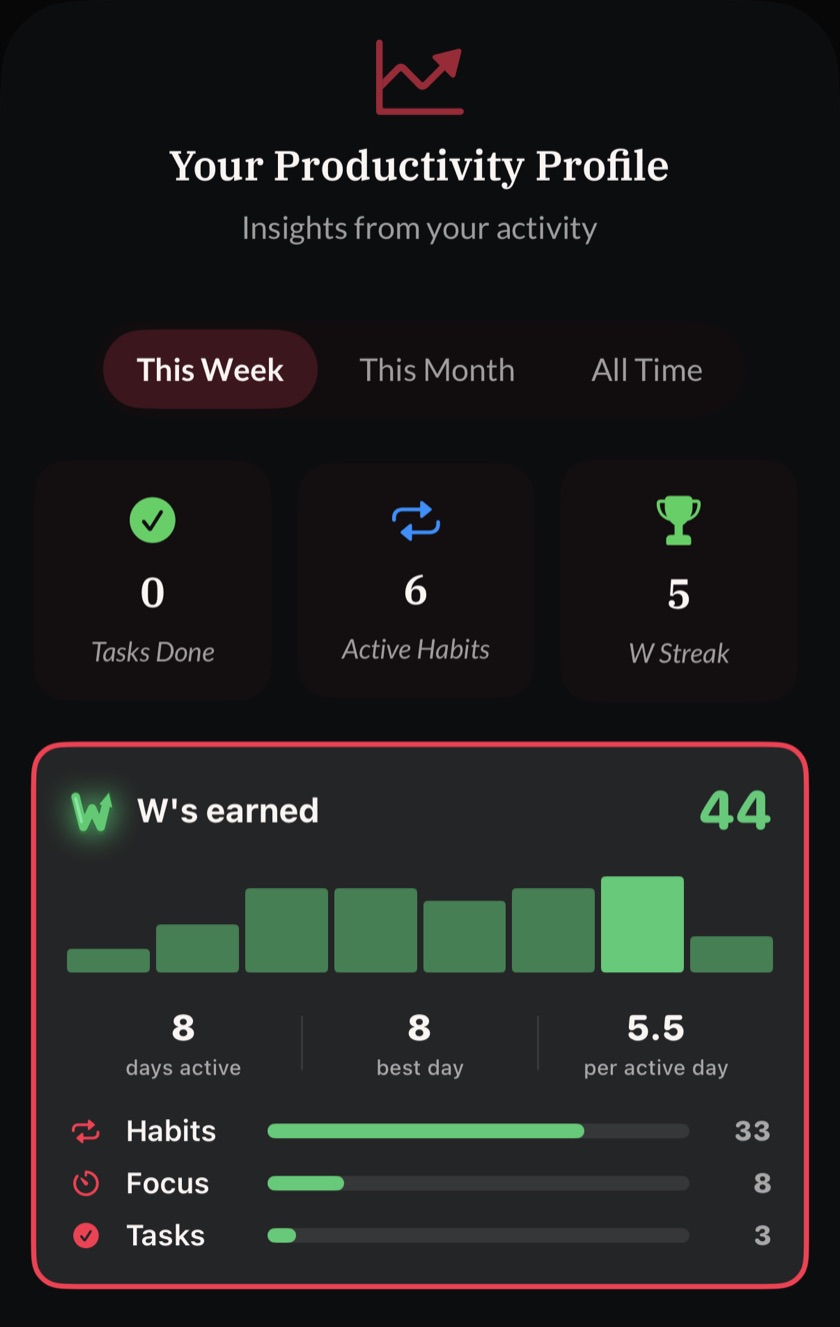
This is why we built Vincere. When you are stuck in that low-energy slump, you don’t need an algorithm shouting motivational slogans at you. You just need a tiny crew—one or two friends—who can see that you showed up. With Vincere, there is no public feed to scroll through or perform for; you simply share a daily habit or a task with people you trust. When you manage that five-minute walk or finally put your shoes on, you check it off, snap a quick photo proof, and earn your win for the day. Knowing someone is gently waiting on the other side of your effort makes getting off the couch feel human instead of lonely.
When you can’t summon willpower, let your circle help. Share one small daily habit on Vincere and check off your win.
Get Vincere on the App StoreScan withyour iPhone
When Rest Is the Real Win
There will be days when the freeze isn't something to push through. There are days when your body is staging an intervention because you have ignored its whispers for too long.
If you have tried the five-minute rule, drank the water, asked for help, and your body still refuses to move: surrender the fight. Not by scrolling through social media while soaking in guilt, but by choosing deliberate, conscious rest. Close your eyes. Turn off the notifications. Let the dishes sit.
You are allowed to be tired. You are allowed to take up space on this earth without constantly producing proof that you deserve to be here.
(Note: If this heavy, exhausted paralysis has lasted for weeks without relief, or comes with feelings of profound hopelessness, please reach out to a doctor or mental health professional. Prolonged fatigue is often a symptom of underlying physical conditions or depression, and you do not have to figure it out alone.)