 Vincere
The alarm rings at 6:45 a.m., and before you even open your eyes, a heavy weight drops into your chest.
You haven't moved an inch, yet you already feel behind. Your hand wanders across the nightstand, finds the cold glass of your phone, and within twenty seconds, you are squinting into bright blue light. You see emails that arrived while you slept, breaking news designed to alarm you, and perhaps a video of someone who has already run six miles, meditated, and made green juice from scratch before sunrise.
By 6:50 a.m., your nervous system is in full emergency mode. Your throat is dry, your jaw is clenched, and the quiet voice of the inner critic starts its daily broadcast: You're already late. You're already failing.
If mornings feel like an obstacle course you dread before your feet even touch the floor, you don't need another rigid, two-hour wellness performance. You need a landing strip.
Why Most Morning Routines Make Us Miserable
Somewhere along the way, we turned waking up into a high-stakes moral exam.
The internet told us that successful people wake up at 4:30 a.m., journal three pages of deep epiphanies, lift weights, and conquer the world before breakfast. When you try to replicate that—especially when carrying exhaustion, grief, or just a demanding job—it collapses by day three.
Then all-or-nothing thinking takes over. You tell yourself, Well, I didn't wake up at 5:00, and I looked at my phone, so the morning is ruined.
A morning routine isn't meant to prove your discipline to an imaginary judge. Its only real job is to bring your nervous system gently online so you can face your life without panicking. When you are dreading the day, adding fifteen new chores disguised as "self-care" only makes the dread heavier.
Here is a practical, grounded morning routine checklist designed for messy human lives. Pick two or three steps today. That is plenty.
Ease into your morning. Track one gentle habit with a friend on Vincere and start tomorrow with a small win.
Try Vincere free Scan with
your iPhone
The Realistic Morning Routine Checklist
1. Drink Water and Minerals Before Screen Time
When you wake up, your brain is physically dehydrated after seven or eight hours without water. Mild dehydration mimics the physical symptoms of anxiety: lightheadedness, brain fog, and an elevated heart rate.
Before you touch your screen, drink a large glass of water. If you wake up sluggish or with a dull headache, try morning routine electrolytes—even just a tall glass of room-temperature water with a pinch of unrefined sea salt and a squeeze of lemon. It rapidly restores cellular hydration and gives your adrenal glands the raw materials they need to regulate cortisol naturally.
2. Put Sunlight into Your Eyes
You don’t need an expensive light-therapy box if the sky is visible. Step outside, step onto a balcony, or simply stand by an open window for three to five minutes.
Natural morning light triggers a timed release of cortisol—the healthy kind that clears sleep inertia—and starts a biological timer for melatonin production twelve to fourteen hours later. It tells your ancient biology that night is over and you are safe to wake up.
3. Take One Low-Stakes Physical Win
Don't worry about an intense gym session right now if getting out of bed felt like lifting a boulder. Pick one tiny, physical action that requires zero willpower:
- Make the bed loosely (pull the duvet up so it looks clean).
- Wash your face with cold water.
- Do sixty seconds of gentle stretching in your pajamas.
Completing one small, tangible physical action provides proof that you have some agency today, which softens the freeze response.
4. Five Minutes of Quiet Input
Before you let the outside world scream at you through notifications, give yourself five unbothered minutes.
Sit with your tea or coffee. Don't listen to a high-speed productivity podcast. Don't read the news. Look out the window, pet your cat, or write down the single thing you feel most anxious about on a scrap of paper so it isn't rattling around inside your head.
5. Name Your Single Most Important Move
Overwhelm happens when every task on your to-do list pretends to be of equal urgency. It leaves you paralyzed.
Look at your day and ask: If I could only get one meaningful thing across the finish line today, which one would let me sleep tonight with a clear conscience? Write that one thing down. Everything else is secondary.
Adapting the Checklist: When Life Isn't Quiet
Most productivity advice is written for someone with zero domestic responsibilities, quiet mornings, and a private chef. Real life is rarely that tidy.
The Morning Routine for Kids and Busy Households
If your morning involves packing lunches, finding missing shoes, and coaxing small children out the door, your morning routine cannot look like a silent retreat. Trying to force it will only make you irritable.
In family environments, simplicity saves your sanity: * Prepare the runway the night before: Clothes laid out, backpacks zipped by the door. * Use a simple visual morning routine chart for kids: Children thrive on predictable rhythms. A visual chart with pictures (teeth, shoes, backpack) removes you from the role of constantly nagging, which lowers the household temperature before 8:00 a.m. * Claim three minutes of sanity: Even if your personal "routine" is just drinking your electrolytes in silence while hiding in the bathroom for two minutes, claim it. It counts.
The "Morning Routine to Live to 100" Myth
There is endless online chatter about the ultimate morning routine that will help you live to 100. People buy cold plunges, infrared saunas, and red-light masks.
Yet when researchers look at actual Blue Zones—regions where people regularly live healthy lives past a century—centenarians aren't optimizing every second. Their morning routine is remarkably humble: * They wake naturally without loud panic alarms. * They drink tea, water, or coffee with family or neighbors. * They move naturally outside in the garden or on a walk. * They start the day without rush.
Longevity is built on low chronic stress, real connection, and consistent movement, not twenty biohacks executed under high pressure.
When Consistency Falls Apart
If you have tried ten different morning routines and abandoned every single one, please know you are not broken. Starting over does not mean you lack discipline; it usually means your plan was too heavy for your current season of life.
Habits survive much better when you don't carry them entirely in your own head. When we keep our goals private, our inner critic easily talks us into giving up. But when someone else knows what you are attempting, showing up feels lighter.
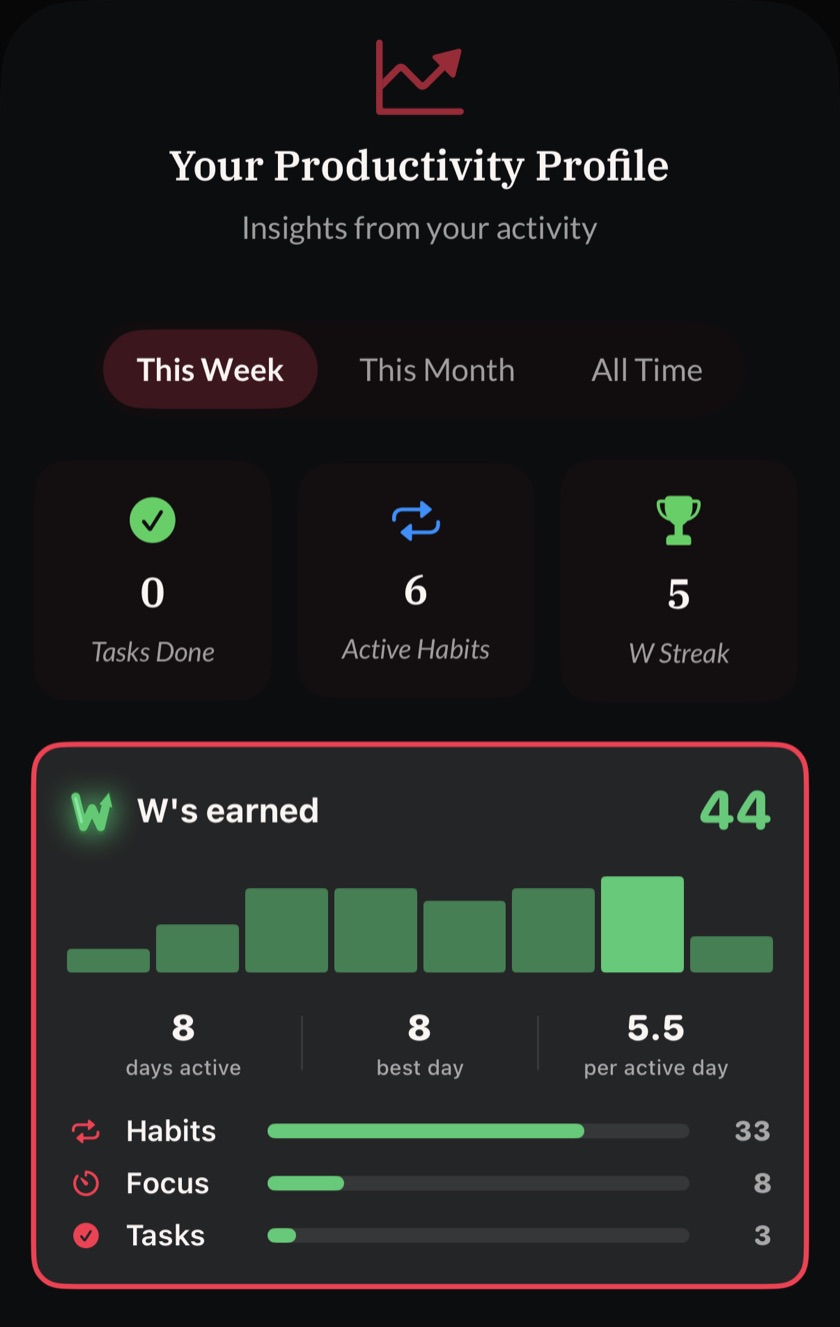
This is why we built Vincere. It’s an iPhone app designed to help you build habits with a crew, without public social feeds or follower counts. You can set up a simple morning habit—like drinking your water or stepping outside—and share it with one or two close friends. When you complete it, you earn a "W." You can even snap a quick photo proof for your crew.
There's also an AI coach named Vince that can check in on your mornings gently, without judgment, helping you plan a day you can actually handle.
Let your AI coach Vince plan a realistic morning check-in that keeps your nervous system calm and your day focused.
Get Vincere on the App StoreScan withyour iPhone
How to Start Tomorrow Morning
Tonight, before you go to sleep, resist the urge to redesign your entire life. Do not set an alarm an hour earlier. Do not write a 12-item checklist.
Just put a tall glass of water on your nightstand. Decide on the one thing you will do before you touch your phone—even if it is just taking three deep breaths and feeling your feet against the carpet.
Mornings are not a performance. They are simply how you greet yourself before you greet the world. Treat yourself gently, take one small win, and let that be enough.