 Vincere
It is 10:42 p.m., and your laptop screen has been casting the same pale blue glow over your desk for three hours.
At the top of the browser sits a document titled History Term Paper Draft. So far, it contains your name, today’s date, and a single half-finished sentence you’ve retyped four times. Beside the laptop, your phone screen wakes up every ninety seconds with notifications. You pick it up, check an app you don’t even care about, put it face down, stare at the blank white document, and feel a cold, heavy knot tighten in your stomach.
You aren’t relaxing. Scrolling social media doesn't feel fun right now; it feels like hiding under a coat in a burning building. You want desperately to finish this so you can sleep without a knot in your throat, yet every fiber of your body resists typing the next word.
If you are trying to figure out how to stop procrastinating school work, the first thing you need to know tonight is simple: you are not lazy, and you are not broken. You are caught in an emotional freeze response.
Why Homework Triggers the Freeze
Most advice treats school procrastination as a calendar problem. People tell you to buy a paper planner, color-code your highlighters, or set a timer for 8:00 a.m. But when 8:00 a.m. rolls around, you still can’t move.
That’s because delaying your assignments is rarely about poor time management. It is an emotional regulation problem. When a task feels threatening, your brain’s threat center treats that 2,000-word essay like physical danger.
What makes school work feel dangerous? * Perfectionism in disguise: If you don't start, you can’t produce work that falls short of your standards. The blank page protects your potential. * The inner critic: The quiet voice insisting, You should have started this two weeks ago. Everyone else handles this easily. Why are you like this? * Ambiguity and overwhelm: When an assignment prompt is vague or massive, your executive function stalls. You literally do not know the very first physical action to take.
When you sit alone in a quiet room with high stakes, self-criticism, and vague instructions, running away to your phone is an entirely predictable reflex. If you've been carrying this pattern for months, it is easy to fall into feeling guilty for not being productive, which only deepens the dread.
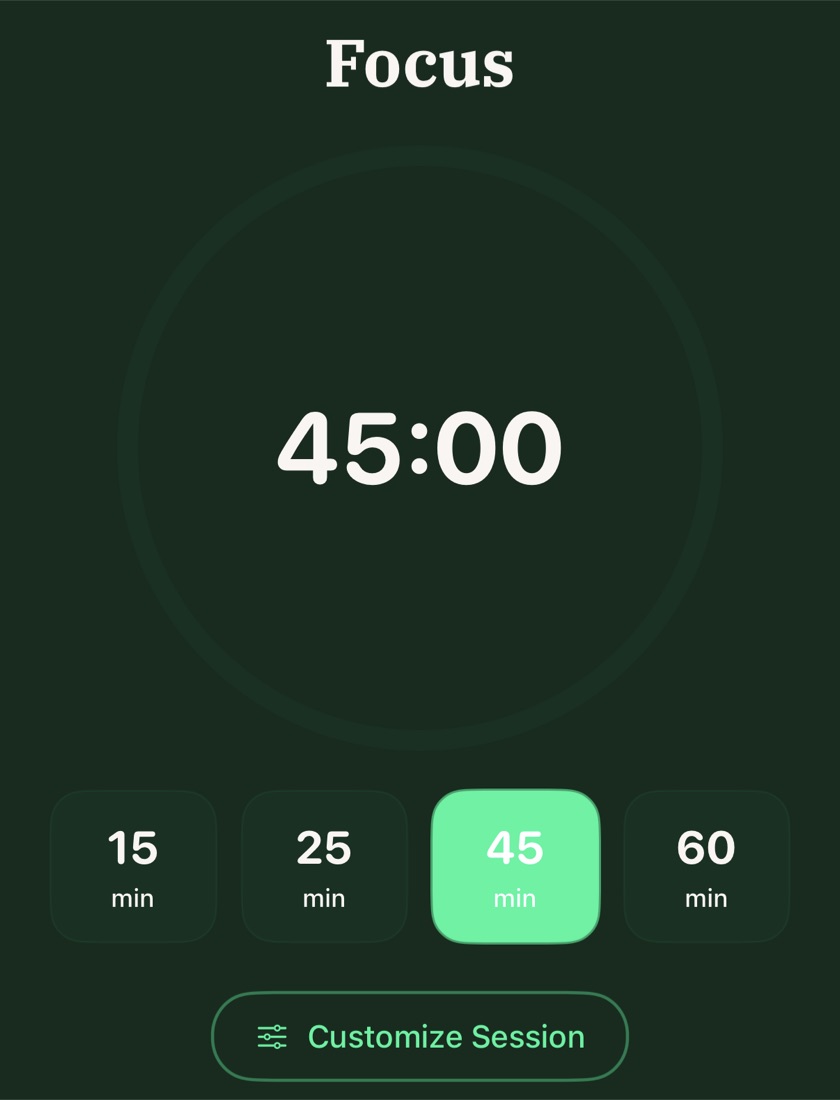
Break the study paralysis right now: start a quiet 15-minute focus session in Vincere and take your first tiny step.
Try Vincere free Scan with
your iPhone
How to Stop Procrastinating With ADHD or Overwhelm
If your brain leans neurodivergent, executive dysfunction adds another layer of quicksand. Traditional study advice assumes that starting a task is like turning a key in an ignition. With ADHD, it often feels like the ignition wire has been cut clean through.
When learning how to stop procrastinating with ADHD, willpower is a bad strategy. Dopamine is an interest-and-clarity chemical. To get through the wall of awful, you have to dramatically lower the friction of beginning:
- Externalize the very first step: Don't write "study biology" on your to-do list. That isn't a step; it's a cloud. Write: Open textbook to page 114.
- Remove the blank page terror: If you have to write a paper, change the font to Comic Sans, set the page color to soft grey, or write bullet points in an email draft to yourself. Lowering the formality helps disarm your brain's alarm bells.
- Use sensory bridges: Put on brown noise, light a specific candle, or sit on the floor instead of your desk. A physical shift can interrupt the dopamine-deprived paralysis loop.
How to Stop Procrastinating and Get Things Done Tonight
You don't need a total life makeover before midnight. You just need to break the spell of the delay. Here is a practical, grounded way to ease out of the freeze right now.
1. Give Yourself Permission to Write Garbage
Procrastination thrives on high expectations. The antidote is aggressively lowering your standards for the first ten minutes.
Tell yourself: I am going to write the absolute worst introductory paragraph in the history of this school. Write sentence fragments. Write "insert smart thought about the French Revolution here." Once words exist on the screen, your brain shifts from creation mode (terrifying) to editing mode (much easier).
2. Make the Smallest Move Possible
You don't have to finish the assignment tonight; you just have to touch it.
Borrow the two-minute rule: commit to opening the document, formatting the title, and reading the first question on the rubric. If the dread is overwhelming after two minutes, you have permission to stop. Nine times out of ten, crossing the friction threshold of starting is enough to dissolve the physical panic. We often write about this momentum shift in the dreaded delay and how to stop it.
3. Stop Waiting for Motivation
Waiting until you "feel like doing homework" is a trap. Motivation does not precede action; it is a byproduct of action. You take one tiny step, experience a microscopic sense of competence, and that feeling provides the fuel for step two. Move your hands first, and let your feelings catch up when they are ready.
Why Procrastination Grows in the Dark
Dread multiplies in isolation. When you sit alone in your room with an overdue assignment, you imagine your classmates breeze through their reading while you alone are incompetent and disorganized. Shame convinces you to hide your struggle, which keeps you stuck at your desk, suffering in silence.
The fastest antidote to academic dread is quiet, low-pressure presence.
This doesn't mean hosting a chaotic study group where nobody gets anything done. It means letting someone else see that you are trying. Knowing that one other human being knows you sat down to work—and will notice when you finish—lightens the emotional gravity in the room.
This is why we built Vincere. Instead of drowning in public feeds or complicated study systems, Vincere lets you share a single task or habit with a close friend or study partner. You start a 25-minute focus session, put your phone down, and check it off when you're done. You can snap a quick proof photo of your messy notes to earn a "W"—visible only to the friend you picked. If you feel totally stuck on how to map out an overloaded finals week, you can talk it through with Vince, the built-in AI coach, who will calmly break down your deadlines into doable daily steps without judgment.
Don't carry academic dread alone—share one school task with a trusted friend on Vincere and see who shows up today.
Get Vincere on the App StoreScan withyour iPhone
One Tiny Step for Right Now
Take a deep breath and let your shoulders drop away from your ears. Unclench your jaw.
You don't have to fix your entire academic track record before you go to sleep. You don't have to master discipline forever. You only need to answer one question: What is the next five-minute piece of work I can do?
Open the tab. Read the prompt. Put two messy sentences down. Earn that single win, close the laptop, and let yourself rest. Tomorrow is a clean slate.
(Note: If academic dread is accompanied by persistent feelings of hopelessness, severe panic, or an inability to function day to day, please reach out to your school's counseling center or a healthcare provider. You do not have to carry heavy mental health burdens on your own.)