 Vincere
The gym bag sits by the door, a silent monument to yesterday’s ambition. Your new language app hasn’t been opened in three days. That book on your nightstand? Still on page seven.
If this sounds familiar, you’re not alone. It’s that familiar ache of self-disappointment, the quiet voice that whispers, "See? You can't stick to anything." You started with so much enthusiasm, so much resolve, convinced this time would be different. But somewhere between day three and day seven, life happened, motivation waned, and the habit you swore you'd build drifted away like a forgotten cloud.
This cycle—start, falter, give up, feel bad—isn't a sign of your failure. It's often a sign that our approach to building habits is fundamentally flawed. We’ve been fed a narrative of willpower and discipline that sets us up to fail, leaving us feeling guilty and ashamed when we inevitably fall short.
Why Your "Discipline" Isn't Enough (And What Actually Works)
The biggest myth about building habits is that it's all about brute-force discipline. We see successful people and assume they possess some superhuman ability to just do the thing. But true discipline isn't about an endless well of willpower; it’s about creating systems that make success almost inevitable. It’s about being kind to your future self.
When we try to go from zero to hero, we’re setting an impossibly high bar. That’s why the "all-or-nothing" mentality is so destructive. You miss one day of the gym, and suddenly, the whole "new me" narrative crumbles. You think, "Well, I messed up, might as well quit." This isn't a lack of discipline; it's a lack of a realistic, forgiving strategy.
The real secret to building habits that stick is to make them so tiny, so easy, and so embedded in your life that not doing them feels stranger than doing them.
Feeling stuck in the habit-building cycle? Start with one tiny step today and invite a friend to cheer you on with Vincere.
Try Vincere free Scan with
your iPhone
The Tiny Action Principle: How to Build Habits That Last
Forget grand gestures. The most powerful habits start small—ridiculously small. Think of it as lowering the activation energy for your desired behavior.
Make It So Small You Can't Say No: The 2-Minute Rule
This isn't about being lazy; it's about tricking your brain into starting. If a new habit takes less than two minutes to do, it's much harder to procrastinate.
- Want to read more? Read one page of a book.
- Want to exercise? Put on your workout clothes.
- Want to meditate? Sit silently for 60 seconds.
- Want to clean? Wipe down one counter.
The goal isn't to do the whole thing, but to start the whole thing. Often, once you start, the momentum carries you forward. The biggest hurdle is usually just getting going. By making the entry point minuscule, you bypass your inner critic's resistance.
Design Your Environment for Success
Your surroundings are a powerful, often overlooked, driver of your habits. If you want to build habits that stick, make them obvious and easy.
- Want to drink more water? Keep a full water bottle on your desk or by your bed.
- Want to play guitar? Leave it out on a stand instead of in its case.
- Want to take your vitamins? Put them next to your coffee maker.
Conversely, make bad habits invisible and hard. If you want to scroll less, put your phone in another room or turn off notifications. Remove the temptation, and you remove the need for willpower.
Anchor New Habits to Existing Routines (Habit Stacking)
Don't try to carve out entirely new blocks of time. Instead, piggyback your new habit onto something you already do every single day.
- After I brush my teeth, I will [new habit]. (e.g., "After I brush my teeth, I will do 5 push-ups.")
- Before I drink my morning coffee, I will [new habit]. (e.g., "Before I drink my morning coffee, I will write down three things I'm grateful for.")
This creates a clear cue for your new behavior, making it part of an existing chain rather than a separate, easily forgotten step.
When Your Brain Fights Back: Building Habits with ADHD (and for Everyone Else Who Feels Overwhelmed)
For many, especially those with ADHD, building habits isn't just about willpower; it's about navigating a brain that thrives on novelty and struggles with consistency. This often leads to an intensified feeling of "I can't stick to anything." If you resonate with this, know that your brain isn't broken; it just needs different strategies.
Many of the tiny action principles above are even more crucial for building habits with ADHD. But here are a few more specific tactics:
- Externalize Your Memory: Don't rely on remembering. Set alarms, use sticky notes, and put physical reminders in your path. If the habit is "take medication," put the bottle on top of your keys.
- Gamify It: Add an element of fun or competition (even if it's just with yourself). Can you beat your "score" from yesterday? Can you get a streak going?
- Immediate Feedback: Ensure you get an immediate sense of accomplishment. Checking something off, seeing a visual streak, or even giving yourself a mental "win" for starting can be powerful.
- Embrace Novelty (Within Limits): If a habit feels boring, can you introduce small variations? Changing your running route, trying a new meditation guide, or learning a different chord on your guitar can keep interest alive.
For a deeper dive into tailored strategies, check out our article: How to Build Habits with ADHD That Actually Stick.
The Quiet Ache of Lonely Self-Improvement (And Why You Need a Crew)
Let's be honest: building habits can feel incredibly isolating. You’re wrestling with your own internal battles, celebrating tiny wins in silence, and feeling the sting of missed days all by yourself. This solitude can amplify feelings of failure and make it easier to give up. After all, if no one's watching, who cares if you skip?
This is where the social side of habit building truly shines. Not in a public performance way, but in the quiet, consistent encouragement of a trusted crew. When one kind person sees your effort, even your tiny starts, the feeling grows. Knowing someone else is on a similar journey, or simply aware of your commitment, adds a gentle layer of accountability and shared experience. It turns self-improvement from a lonely uphill climb into a supported journey.
Ready to make progress without the pressure? Plan your week and track your wins with an AI coach and your crew on Vincere.
Get Vincere on the App StoreScan withyour iPhone
When You Miss a Day (Because You Will): The Art of the Reset
Here’s the absolute truth: you will miss a day. Maybe two. Maybe a week. The idea of a perfect streak is a myth and a trap. It fosters that "all-or-nothing" thinking that destroys progress. One missed day doesn't ruin everything. It's just one data point.
The real difference between those who build habits that stick and those who don't isn't avoiding misses, it's how quickly they recover from them.
- Don't let one miss become two. If you miss a day, make it a non-negotiable rule to get back on track tomorrow.
- Forgive yourself. Beat yourself up, and you'll only make it harder to restart. Acknowledge the miss, learn from it if possible (why did it happen?), and move on.
- Refocus on the tiny action. If you're struggling, scale back even further. Just one page. Just one push-up. Just get back in the game.
Remember, consistency isn't perfection; it's returning to the path after a detour. For more on navigating those inevitable misses, read our article: Ashamed After Breaking a Streak? Why One Miss Doesn't Ruin Everything.
Your Accountability Crew and Your Wins (Without the Noise)
This is where a little structure and the right kind of support can make all the difference. Imagine a space where you can commit to your habits, track your progress, and share your journey with people you trust, without the pressure of a public feed.
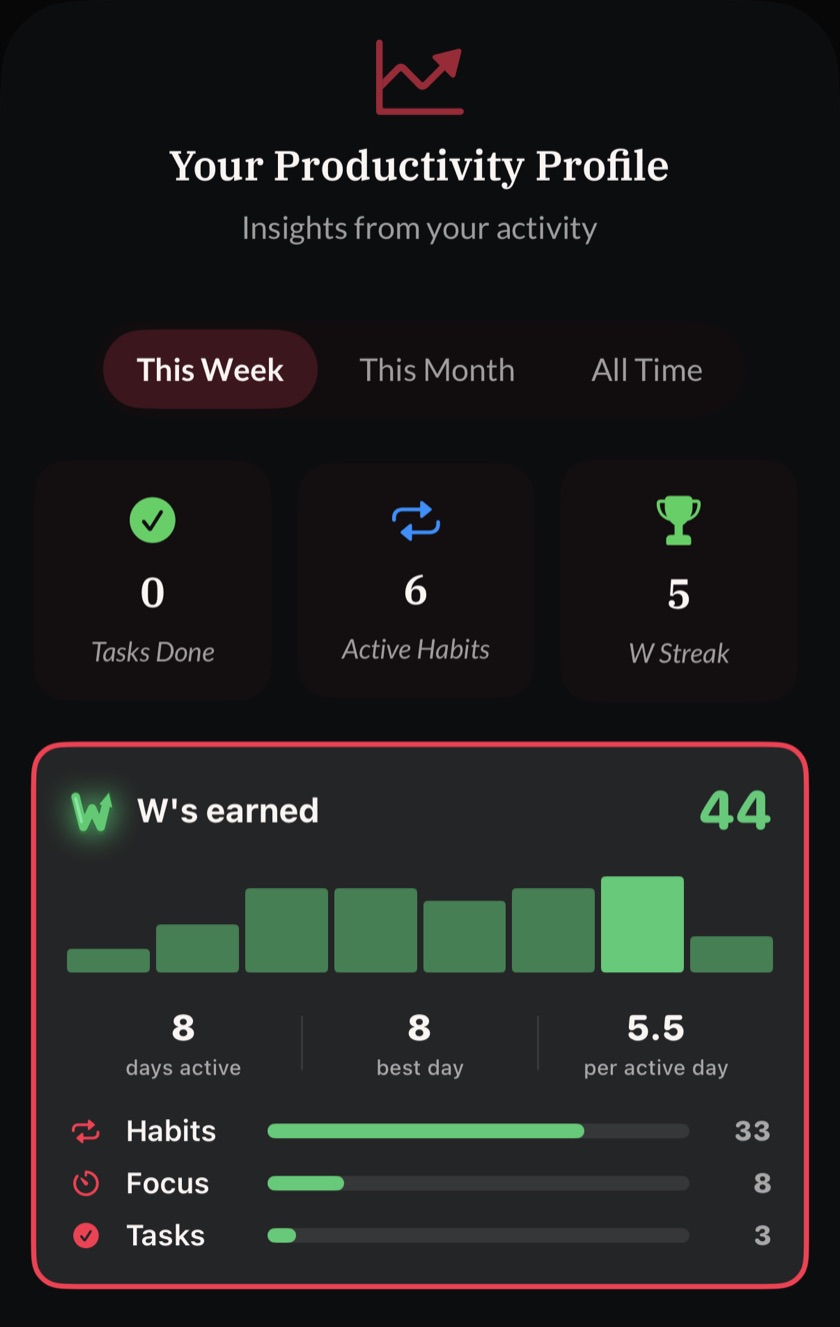
That's the idea behind Vincere. It's a free iPhone app (iOS 26+, Apple Watch, widgets) designed to help you build habits with a crew. You can share tasks and habits with friends or assign them, and everyone in your crew sees who showed up today. When you check off a habit, you earn a "W" (a win), and adding a photo of your proof (like that gym selfie or a picture of your cleaned counter) gets you two W's. Miss a day, and it's an "L"—a clear, non-judgmental piece of feedback.
You can create "Do" and "Don't" habits, manage tasks, set up a focus timer, and even chat with Vince, an AI coach that plans your week and provides morning & evening check-ins. Crucially, your privacy is paramount: you pick the audience for your proof photos (just you, followers, habit crew, everyone), and it's private by default. Your friends only see the tasks and habits you explicitly share with them and their corresponding check-offs, creating a supportive, focused environment without the noise of a public timeline.
It's about making your efforts visible to those who matter, not to the whole world. It’s about celebrating your quiet wins and getting back on track with gentle, shared accountability.
Start Today, Not Tomorrow
The urge to overhaul your entire life often stems from that familiar feeling of disappointment. But true change, the kind that sticks, rarely comes from monumental efforts. It comes from stacking tiny, forgiving, consistent actions.
So, instead of resolving to become a "new you" tomorrow, choose one ridiculously small habit. Make it obvious. Make it easy. Connect it to something you already do. And most importantly, invite a friend to see your effort. Stop striving for perfection and start striving for progress, one tiny, imperfect win at a time. The cumulative power of these small steps will surprise you.