 Vincere
You are sitting on the edge of the bed with one sock on, staring at the floor.
The clock is moving, your inbox is filling up, and you genuinely want to get up and do the thing. You care about your job. You care about your health. You want to pass the class, send the email, or just put the laundry away. Yet your body feels bolted to the mattress, weighed down by an invisible, leaden resistance.
Then comes the familiar sting of the inner critic: Why can’t I just do what everyone else does? Why am I so lazy?
If you live with ADHD, you have probably spent years believing you have a motivation deficit. But that isn’t what is happening. Your brain doesn't lack motivation—it lacks consistent access to dopamine, the neurochemical that tells your nervous system, "This task matters right now, so let's move."
Standard productivity advice tells you to rely on grit, discipline, and five-year plans. But neurotypical discipline runs on linear reward systems. If you want to know how to stay motivated with ADHD, you have to stop trying to force an interest-based nervous system into an importance-based box.
Here are six honest, practical ways to find momentum when your brain refuses to engage.
1. Stop Waiting to "Feel Like It"
Most advice assumes feelings precede action: you get inspired, so you work. With ADHD, inspiration is an unreliable visitor. Waiting for the mood to strike often turns into days of scrolling in paralysis.
Action must come before motivation. But to act without motivation, you have to shrink the front door of the task until it’s laughable. If you need to write a report, do not sit down to write the report. Sit down to open a blank document and type the title. If you are struggling with why you can't stick to anything long enough, the entry barrier is almost always set too high.
Once your hands are touching the task, the dopamine engine often starts idling. Lower the threshold until there is zero friction left to dread.
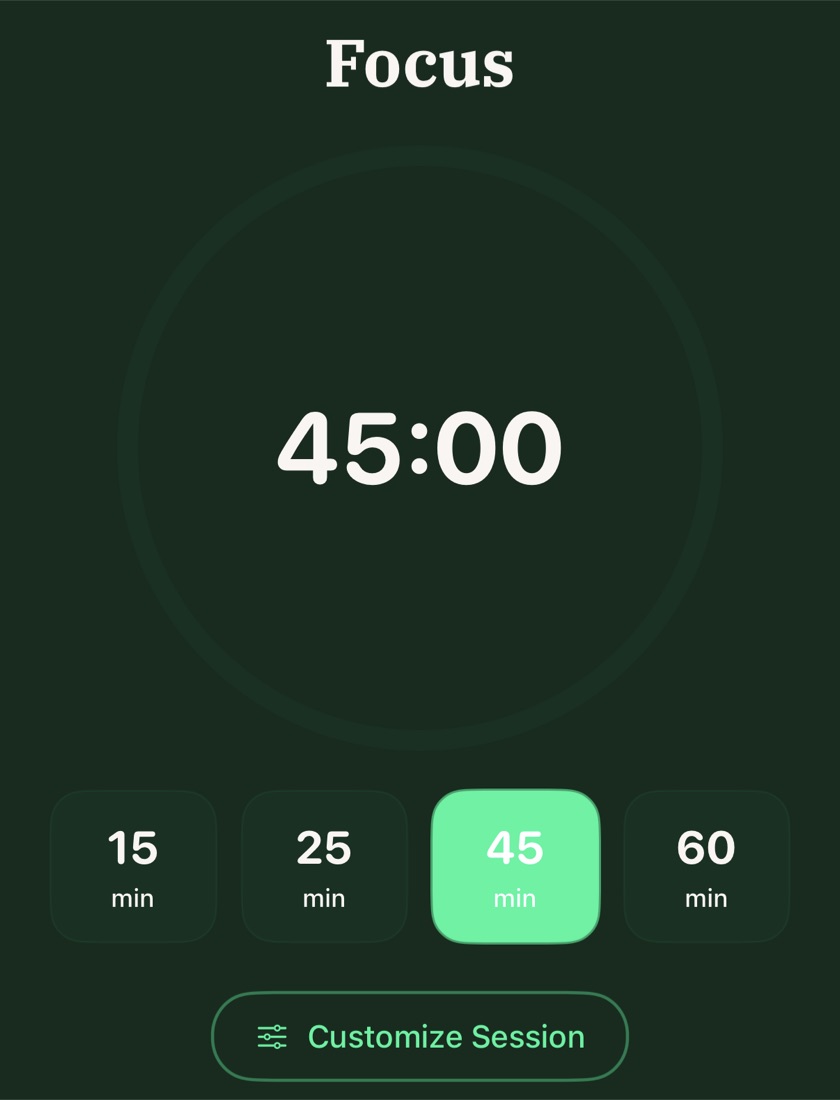
Break through task paralysis: pick one thing, set a 15-minute focus session in Vincere, and let momentum take over.
Try Vincere free Scan with
your iPhone
2. Give Your Brain What It Actually Craves (PINCH)
Dr. William Dodson notes that the ADHD nervous system is regulated by interest, not importance. Knowing a task is "important" rarely sparks action. Instead, your brain seeks five specific triggers—an acronym worth keeping close:
- Passion (genuine curiosity)
- Intrinsically interesting (playful, weird, or engaging)
- Novelty (a new tool, a different location, a fresh playlist)
- Challenge (racing a timer or solving a puzzle)
- Hurry (urgency or a close deadline)
When you feel stuck, ask yourself: Which of these five elements can I inject into this chore right now? Can you turn sending three invoices into a timed five-minute sprint? Can you take your laptop to a coffee shop you've never visited? Give your brain a reason to perk up.
3. How to Stay Motivated at Work: Break the Isolation Bubble
ADHD feeds on isolation. When you sit alone in a quiet room with a daunting project, every distraction becomes louder than your goals. Shame builds in silence.
This is why "body doubling"—working alongside someone else—is one of the most reliable ADHD tools in existence. Having another human being present anchors your attention without demanding direct conversation.
If you are trying to figure out how to stay motivated at work or school, stop working in secret. Tell a coworker you are tackling one spreadsheet before lunch. Jump on a silent video call with a friend. When someone else can witness your effort, the invisible wall between wanting to work and actually working begins to crumble.
4. How to Stay Motivated to Workout: Ditch the All-or-Nothing Rule
The ADHD mind loves absolutes. You are either an athlete going to the gym five mornings a week, or you are completely sedentary, nursing guilt on the sofa.
When you lose momentum after a missed workout, shame tells you that you ruined the streak, so you might as well abandon ship. To rebuild motivation for physical health, redefine a "win." Ten pushups on the living room rug while waiting for your kettle to boil counts. A fifteen-minute walk around the block counts.
Physical movement creates an immediate flood of dopamine and norepinephrine, which directly eases executive dysfunction. Don't exercise to fulfill a rigid 12-week regimen; move today simply to clear the mental fog in your head.
Turn daily consistency into a shared game with friends on Vincere—earn your W’s, snap proof, and build momentum together.
Get Vincere on the App StoreScan withyour iPhone
5. Make Your Progress Visible and Tangible
Working memory issues mean that out of sight is out of mind. When you finish a task, your brain wipes the slate clean almost immediately. By evening, you might feel like you accomplished nothing all day, even if you spent eight hours firefighting emergencies.
To keep motivation alive, you must externalize your effort. Don't let your accomplishments vanish into thin air. Use a visible tracking method—a physical checkmark, a digital log, or a quick photo of the messy desk you just cleared.
Seeing physical proof that you showed up counteracts the false narrative that you are always falling behind.
6. Build a Small Crew to Share the Load
ADHD thrives when effort is gamified and witnessed. It wilts under cold, isolated expectations. You don't need a massive public audience—in fact, public social feeds usually just offer another rabbit hole for doomscrolling. What helps is a small, quiet circle of people who understand the struggle.
This balance between private accountability and low-pressure tracking is why Vincere was built. It’s an iPhone app designed around showing up with a crew rather than grinding alone. You can share habits or one-off tasks with a couple of friends or assign them; whenever you check a task off, you bank a "W" (a win), and snapping a quick proof photo earns you two. There is no endless public feed, no algorithms, and no vanity metrics—just you and people who see that you showed up today.
If you get stuck trying to map out a chaotic schedule, its built-in AI coach, Vince, can help break your week into realistic pieces without the overwhelm. Having a tiny, shared arena makes doing the hard thing feel like a collaborative game rather than an isolated chore.
Be Gentle on Low-Dopamine Days
Some days, the friction is simply higher than others. Your executive function will fluctuate based on sleep, sensory overload, stress, and hormonal shifts. When you hit a wall, punishing yourself will never generate the dopamine you need to start moving.
Give yourself permission to do the bare minimum version of your routine. Turn down the lights, strip the day's to-do list down to a single item, and let that be enough.
(Note: If the paralysis you feel goes beyond day-to-day focus struggles and borders on deep hopelessness or severe burnout, please reach out to a healthcare professional or therapist who specializes in neurodivergence. You deserve real support.)
Pick one small thing in front of you. Shrink it until it feels easy. Put your shoes on, start the timer, and let the first small step be your only goal.