 Vincere
You know the feeling, don’t you? It’s noon, and you’ve been "working" for hours. Your browser has a dozen tabs open, each a rabbit hole you tumbled down after intending to check one quick detail. Your to-do list, which started optimistically, now mocks you from its perch on your desktop, growing longer with every distraction. The sheer weight of it all presses down. You feel guilty, frustrated, and utterly stuck, wondering why something that feels so simple for others is an impossible mountain for you.
That heavy, stuck feeling isn't a sign of laziness or a lack of desire. If you live with ADHD, it's often a direct result of executive function challenges – the brain's internal manager that handles planning, task initiation, sustained attention, and time perception. When your brain struggles with these, starting a task feels like pushing a boulder uphill, and staying on track feels like trying to catch smoke. Time can feel either like an endless void or an impossible rush, making "getting things done" a chaotic battle.
It’s easy to feel a quiet shame when you're caught in this loop. You see others sail through their days, while you’re drowning in half-finished projects and unmet intentions. But what if there was a simple, compassionate tool that acknowledged your brain's unique wiring and offered a clear path forward, one small step at a time?
Enter the Pomodoro Technique, a deceptively simple time management method that can be an absolute game-changer for those of us navigating the swirling currents of ADHD. It’s less about brute-force discipline and more about gentle structure, designed to help you surf the waves of focus and distraction rather than being pulled under.
What is the Pomodoro Technique Explained?
At its core, the Pomodoro Technique is about working in focused bursts, followed by short breaks. Here’s the classic breakdown:
- Choose a task: Pick one, just one, thing you need to do.
- Set a timer for 25 minutes: This is your "Pomodoro."
- Work intensely on that single task: No distractions, no switching tasks. If something else pops into your head, quickly jot it down to address later.
- When the timer rings, stop immediately: Even if you're mid-sentence.
- Take a 5-minute break: Step away from your work. Stretch, grab water, do something unrelated.
- Repeat: After four Pomodoros, take a longer break (15-30 minutes).
Simple, right? The magic for ADHD brains, however, lies in why this structure works so well.
Feeling overwhelmed by ADHD and struggling to start? Break down tasks and conquer distractions with Vincere's focus timer and AI coach.
Try Vincere free Scan with
your iPhone
Why the Pomodoro Technique is a Life-Hack for ADHD
This method directly addresses many of the common hurdles faced by people with ADHD:
1. Conquering Task Initiation (The "Just 25 Minutes" Trick)
The biggest hurdle is often just starting. A huge, daunting project feels insurmountable. The Pomodoro Technique breaks it down into bite-sized, non-threatening chunks. "I just need to focus for 25 minutes" is far less intimidating than "I need to write this entire report." This lowers the activation energy needed to begin, making the initial leap much easier.
2. Taming Distraction and Boosting Focus
For an ADHD brain, externalizing time is crucial. The ticking timer acts as an external reminder to stay on task, helping to anchor your attention. Knowing a break is coming soon can also make those 25 minutes of focused effort feel more manageable. If your mind wanders, you gently guide it back, knowing you're only committed for a short sprint. This is where a dedicated pomodoro technique timer is incredibly helpful – it keeps the time for you, so you don't have to.
3. Combatting Time Blindness
"How long have I been working on this?" is a question many with ADHD frequently ask, often realizing hours have flown by or barely any time has passed. The fixed 25-minute intervals provide clear, tangible units of time, helping you build a more accurate internal clock and understand how long tasks actually take.
4. Preventing Hyperfocus Burnout
While hyperfocus can feel like a superpower, it often comes at a cost – ignoring basic needs, overworking, and crashing hard afterward. The mandatory breaks in the Pomodoro Technique force you to step away, preventing you from pushing yourself past the point of diminishing returns. These regular resets help sustain energy and focus over a longer period.
5. Embracing Productive Breaks
For many with ADHD, breaks can quickly spiral into another distraction. The structured 5-minute break encourages genuine disengagement from the task without allowing enough time to get completely derailed. It’s an intentional pause, not a free-for-all.
How to Make the Pomodoro Technique Work for Your ADHD Today
It’s not just about setting a timer; it’s about strategically adapting it to your brain.
1. Choose Your Battlefield (and Your Weapon)
- One Task Rule: Seriously, pick one. Not two, not three. Just one. Trying to juggle multiple tasks within a Pomodoro is a recipe for overwhelm.
- Break it Down: If your task is "Write report," break it into "Outline report," "Research Section 1," "Draft Introduction." The smaller, the better. This is where an AI coach, like Vince in the Vincere app, can be incredibly helpful. You can chat with Vince about your overwhelming tasks, and it can help you break them into manageable steps and create the tasks for you.
- Declare War on Distractions: Before you start your Pomodoro, silence notifications, close unnecessary tabs, put your phone away. Use an App Blocker (like the one in Vincere) to temporarily restrict access to distracting apps during your focus sessions. This small proactive step makes a huge difference.
2. Master the "Just Start" Loop
- The Power of Proximity: Have everything you need for your chosen task within arm's reach. The less friction, the better.
- The "Two-Minute Rule": If you can start a task in two minutes, do it immediately. This often applies to setting up your first Pomodoro. Just start the timer.
- Don't Chase the Squirrels: When a brilliant, distracting thought pops into your head during a Pomodoro, don't follow it. Jot it down quickly on a scratchpad and promise yourself you'll address it during your break or after your sessions.
3. Optimize Your Breaks
- Active vs. Passive: Instead of mindlessly scrolling (which can be just as draining as hyperfocus), use your 5-minute break for something truly refreshing:
- Stretch or stand up.
- Grab water.
- Look out a window.
- Do a few jumping jacks.
- Hydrate your brain with a quick, non-work-related activity.
- Longer Breaks are for Reset: Your 15-30 minute breaks after four Pomodoros are for truly disengaging. Walk around the block, make a snack, listen to a song. These are essential for preventing mental fatigue.
4. Pomodoro Technique for Studying: Specific Tips
When you’re tackling academics, the Pomodoro can be your best study buddy: * Topic by Pomodoro: Dedicate each 25-minute session to one specific topic or problem type. * Active Recall during Breaks: Instead of just resting, use a minute or two of your 5-minute break to quickly jot down or verbally recall key points from the previous Pomodoro. This strengthens memory without burning you out. * Switch It Up: For longer study blocks, rotate subjects every few Pomodoros to keep your brain engaged and prevent boredom. * If procrastination is your main nemesis with schoolwork, you might find more strategies here: The Drag of Delay: How to Stop Procrastinating and Get Things Done.
The Social Side of Staying on Track
It’s easy to feel alone in your struggles with focus and productivity. The quiet cycle of trying, failing, and feeling ashamed often keeps us from seeking help or even acknowledging the challenge. But human connection and gentle accountability can be powerful antidotes. Knowing someone else sees your effort, even in a small way, can be the tiny spark that keeps you going.
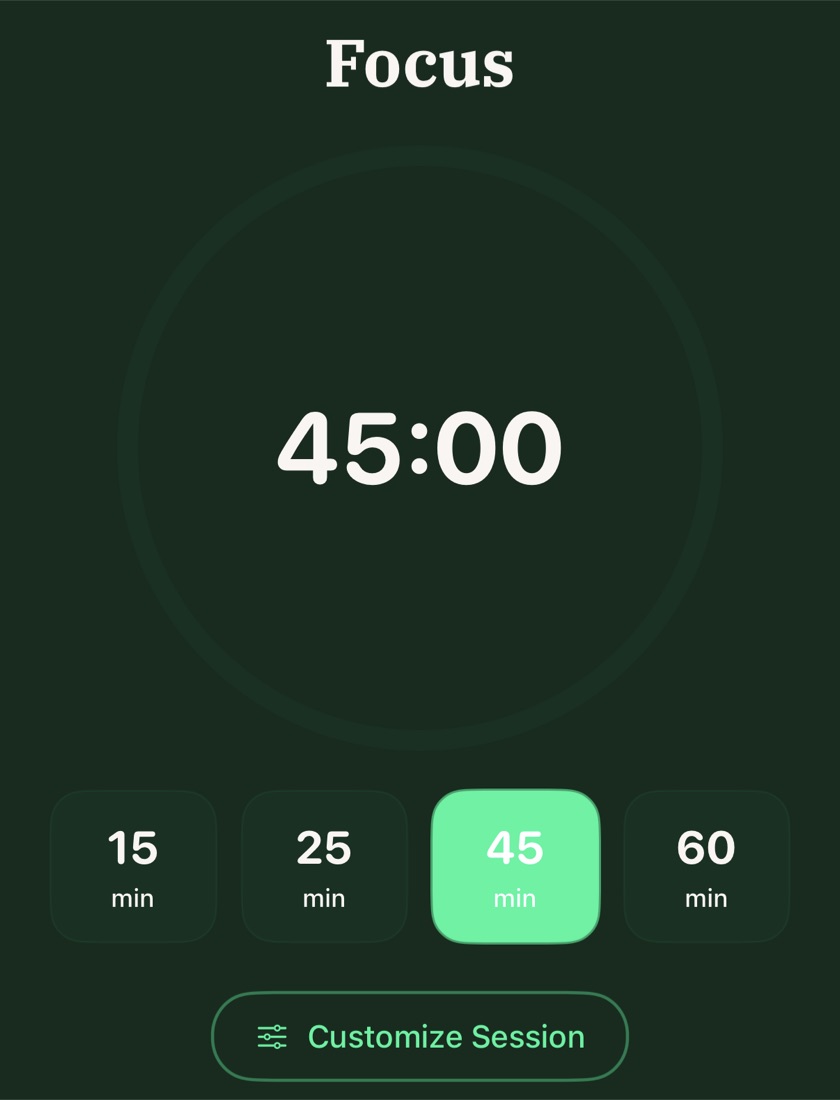
This is where the Vincere app comes in. Its built-in focus timer directly supports the Pomodoro Technique with customizable 15/25/45/60 minute sessions, even with Live Activity on your iPhone. Imagine setting your Pomodoro, knowing your timer is active, and then after your session, marking it off as a win. You earn a "W" (win), building a positive streak that combats that feeling of inconsistency. You can even share tasks and habits with a small group of trusted friends. They won't see everything you do, just the specific tasks or habits you choose to share, and whether you've checked them off. This gentle accountability – knowing your "crew" can see you showed up today – can make all the difference in turning a solo struggle into a shared journey toward consistent progress. If you're often feeling overwhelmed by your to-do list, an AI coach like Vince can plan your week by conversation and create tasks for you, guiding you through morning and evening check-ins. You can learn more about managing that overwhelm here: Feeling Overwhelmed? How to Be More Productive with ADHD, Starting Today.
Want to build consistent focus with ADHD? Track your Pomodoro wins and celebrate progress with friends in Vincere.
Get Vincere on the App StoreScan withyour iPhone
Your Action Plan for Today
Don't try to implement the perfect Pomodoro schedule immediately. Today, pick one small task that’s been nagging you. Set a timer for 25 minutes (use your phone, a physical timer, or the Vincere focus timer). Commit to just that one Pomodoro. When it rings, take your 5-minute break.
Notice how that feels. That single, completed Pomodoro is a win. It’s proof that you can focus, even for short bursts. You're not broken, your brain just thrives on a different kind of structure. And with a tool like the Pomodoro Technique, you can build that structure, one focused sprint at a time.
Remember, consistency beats intensity. Small, repeatable wins accumulate into significant progress.