 Vincere
It’s Sunday evening, and a familiar knot tightens in your stomach. The quiet hum of the washing machine, the half-read book on the nightstand, the vague memory of errands you meant to run — they all conspire to bring on the Sunday Scaries. You promised yourself this weekend would be different. You’d catch up, relax, maybe even tackle that one project. Instead, it feels like it evaporated, leaving you more tired than when it began, already dreading Monday.
If this feels all too familiar, you're far from alone. The feeling of a "wasted" weekend isn't a sign of laziness; it's often a symptom of unrealistic expectations, the pressure to "do it all," and a lack of intentionality. We often rush into our weekends without a compass, letting external demands or a vague sense of obligation dictate our precious downtime. The result? A cycle of exhaustion and unfulfilled promises that leaves us feeling behind, rather than refreshed.
Why We Get Caught in the Weekend Whirlwind (and How to Break Free)
The modern world often glorifies "busy." We see highlight reels of others' adventurous weekends and feel a quiet pressure to maximize every minute. But this isn't about filling every slot; it's about choosing what genuinely rejuvenates you.
The key to breaking free from the "wasted weekend" trap isn't to meticulously schedule every minute, but to approach your weekend with purpose. It's about designing a weekend that leaves you feeling calmer, more capable, and ready for the week ahead — not more drained. And the good news? You can start today.
Here’s a practical, actionable guide on how to plan your weekend so you can actually enjoy it.
Step 1: Declutter Your Mind (Friday Evening or Saturday Morning)
Before you can plan your weekend, you need to release the week. Our minds often cling to unfinished tasks, unresolved anxieties, and the mental load of the past five days. Carrying that into your Saturday is like trying to relax with a backpack full of bricks.
Your Action for Today: Grab a notebook or open a simple note-taking app. For 5-10 minutes, do a "brain dump." Write down: * Anything lingering from the week: Unsent emails, calls to make, small chores you didn't get to. * Worries for the coming week: Projects, deadlines, appointments. * Any "shoulds" you feel about the weekend: "I should clean the garage," "I should work out," "I should call my aunt."
Once it's all out, take a deep breath. Acknowledge these items, then mentally (or physically, by closing the notebook) put them aside. You're not ignoring them; you're simply giving yourself permission to address them later. This simple act creates mental space for the weekend to begin.
Step 2: Define Your Weekend "Must-Haves" (Not "Should-Haves")
Now that your mind is clearer, it's time to get intentional about what truly matters for your weekend. Forget the societal "shoulds" for a moment. What activities genuinely make you feel rested, joyful, or connected?
Think about your ideal weekend in three categories:
- Rest & Recharge: What helps you truly relax? (e.g., reading a book, a long walk, a quiet coffee, a nap, meditation).
- Joy & Connection: What brings you happiness or helps you connect with loved ones? (e.g., brunch with friends, a board game night, a creative hobby, exploring a new park).
- Essential Responsibilities: What must get done to keep your life running smoothly, but doesn't have to be a major burden? (e.g., groceries, laundry, light tidying).
Your Action for Today: Pick 1-2 items from the "Rest & Recharge" category and 1-2 from "Joy & Connection" that are non-negotiable for this weekend. Then, identify 1-2 essential responsibilities that, if done, will make your week smoother. That's it. Resist the urge to add more. This is how to plan your week effectively by setting realistic expectations for your downtime.
Step 3: Schedule Your Intentions (The 30-Minute Block)
Here's where the rubber meets the road. "Planning" doesn't mean a rigid minute-by-minute itinerary, especially for those who feel overwhelmed or for specific needs like how to plan your week with ADHD. Instead, it means giving your chosen "must-haves" dedicated, flexible space.
Your Action for Today: Open your calendar (digital like Google Calendar, or a paper planner) and block out specific, flexible times for your chosen items.
- For Rest & Recharge: Instead of "read," schedule "Quiet Time: Reading/Nap" for 1-2 hours. If you don't feel like reading, maybe you nap. The intention is rest.
- For Joy & Connection: "Friend Time: Hike/Coffee" or "Creative Block: Painting/Writing." The activity might shift, but the purpose (joy, connection) remains.
- For Responsibilities: Schedule these in short, focused bursts. "Saturday Morning: Groceries (1 hour)" or "Sunday Afternoon: Laundry & Tidy (45 mins)." Doing them early often frees up the rest of the day.
Crucially, build in buffer time. Don't back-to-back activities. Leave open spaces for spontaneity, unexpected detours, or simply doing nothing at all. This is often the most productive thing you can do for your well-being. By protecting these open blocks, you’re also learning how to plan your week to be productive by ensuring you don't burn out.
Step 4: Protect Your Boundaries (Say "No" to the Extra)
You've done the work to intentionally plan your weekend. Now, protect it. This is often the hardest part, especially when external pressures or the inner critic whispers, "You should be doing more."
Your Action for Today: Practice saying "no" to anything that doesn't align with your defined must-haves or essential responsibilities.
- An extra errand someone asks you to run? "I'm focusing on rest this weekend, but I can help with that on Monday."
- The urge to scroll endlessly through social media when you planned quiet time? Put your phone away.
- Feeling lazy and tired and tempted to do absolutely nothing when you planned a walk? Even a 5-minute movement can shift your energy. (If you're often feeling lazy and tired, remember that tiny steps make a difference.)
This isn't selfish; it's self-preservation. When you honor your own need for rest and joy, you show up more fully for everything and everyone else during the week.
Tired of unproductive weekends that leave you drained? Start planning for real rest and joy today with Vincere's simple task and habit tools.
Special Considerations for Your Weekend Plan
How to plan your week with ADHD or when feeling overwhelmed: If you have ADHD or simply feel easily overwhelmed, rigid schedules can backfire. Focus on these adaptations: * Micro-tasks: Break down even "groceries" into smaller steps: "write list," "drive to store," "shop," "put away." * Visual cues: Use a visible checklist or a simple calendar that you can see easily. * Body Doubling: If a task feels too daunting, ask a friend to work on their own tasks (even virtually) while you tackle yours. The presence of another person can be incredibly motivating. * Self-Compassion: If a plan goes awry, it's okay. Adjust, don't abandon. Your goal is to feel better, not achieve perfection. If you often feel overwhelmed, this might be a good time to check out our guide on how to be more productive with ADHD.
How to plan your week as a student: Your weekends are crucial for both academic catch-up and mental health. * Batch study: Designate specific "study blocks" but ensure they are followed by real breaks. * Social connection: Prioritize time with friends to de-stress. * Prep for the week: Use a small portion of Sunday to review your calendar for the coming week, pack your bag, or prep meals. This helps alleviate Monday morning stress.
The Power of Gentle Accountability with Your Crew
It's one thing to make a plan, another to stick to it, especially when your inner critic is loud or you feel isolated in your efforts. This is where the power of a supportive crew comes in.
Imagine you've decided your "Rest & Recharge" for the weekend is "read for 30 minutes in the park." You could create a simple habit for this in an app like Vincere. You could even share this habit with a trusted friend or two. They don't need to join you in the park, but simply knowing someone sees your intention can be a gentle nudge. When you check it off, you earn a "W" (a win!). You might even add a photo of your book in the park as proof, sharing it with just your crew.
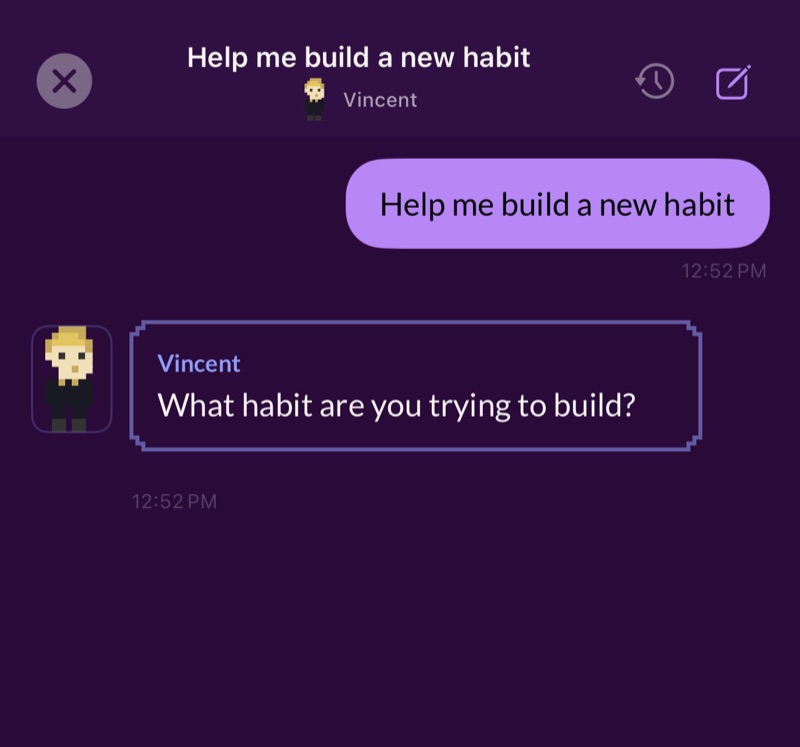
It's not about competition or comparison. There's no public social feed, no likes or followers' timeline. It's about genuine support. When you see your friend earn a "W" for their own weekend goal – whether it's a "morning walk" or "cook a healthy meal" – it's a quiet celebration of collective effort. This kind of shared intention reduces the feeling of isolation and reminds you that small wins, consistently earned, build up to real change. An AI coach like Vince within Vincere can also help you plan your week by conversation, crafting tasks and habits for you with morning and evening check-ins.
Want gentle accountability for your weekend goals? Share a task or habit with a friend in Vincere and celebrate your wins together.
Your Action Plan for This Weekend
Don't wait until Sunday evening to feel the dread. Choose one thing from this guide that resonates most with you:
- Do a quick brain dump to clear your mind.
- Pick 1-2 non-negotiable "must-haves" for your rest or joy.
- Schedule 30 minutes (flexibly!) for one of those must-haves.
- Tell one trusted friend about your intention for a more intentional weekend.
Reclaiming your weekends from overwhelm and dread is a practice, not a one-time fix. But with each small, intentional step, you can transform them into periods of genuine rest, joy, and rejuvenation. You deserve a weekend that truly nourishes you.
 On a computer? Scan with your iPhone camera.