 Vincere
It's 11 PM. The house is quiet, finally. You collapse onto the couch, phone in hand, just for a moment. One quick check of the news, then a harmless scroll through a friend's vacation photos. An hour later, your thumb is numb, your eyes are tired, and a familiar hollow feeling settles in your chest. You look at the clock and think, with a sigh, "I just spent another hour wasting my life on my phone."
That quiet accusation, the sense of precious time slipping through your fingers while you stare at a glowing rectangle, is incredibly common. It’s not just a fleeting thought; it’s a heavy feeling that can whisper, "Why am I wasting my life like this?" or echo the lyrics of a sad song about wasting your life away. It leaves you feeling guilty, unproductive, and oddly depleted, even though you technically "rested."
Why We Get Stuck in the Scroll Cycle
The truth is, our phones are designed to be addictive. They offer endless novelty, instant gratification, and a constant stream of information and connection (or the illusion of it). When you reach for your phone, it's often not because you want to waste time, but because you're:
- Bored: Filling a void, even temporarily.
- Tired: Seeking low-effort stimulation when your energy is low.
- Stressed or Anxious: Escaping uncomfortable thoughts or feelings.
- Lonely: Looking for connection, even if it's passive.
- Overwhelmed: Needing a mental break from real-world demands.
It's a powerful combination that hooks us. You're not weak; you're human, responding to a highly sophisticated design. The challenge isn't about being "good" or "bad"; it's about reclaiming your attention and intentionality.
The good news? You absolutely can shift this pattern. It doesn't require a dramatic digital detox or throwing your phone into a river. It starts with small, deliberate actions, taken today.
The Myth of "Just Put It Down"
If it were that easy, you'd have done it already. Our brains crave convenience and reward. To truly shift, we need to make the alternative easier and more rewarding than the scroll.
You might feel a sense of failure, thinking, "Why can't I just stop wasting my life?" This all-or-nothing thinking often leads us to give up before we even start. Instead, let's focus on micro-shifts.
Your First Tiny Steps to Reclaim Your Time
Here are practical, actionable steps you can try today, designed to be so small they feel almost silly.
1. The 5-Minute "Pocket Test"
Instead of aiming for an hour without your phone, aim for five minutes. Put your phone in your pocket, in another room, or under a cushion. Set a mental timer. For those five minutes, do anything else. Look out the window, take three deep breaths, stretch, doodle on a scrap of paper, or just sit.
The goal isn't to be productive; it's to create a tiny space between the impulse to grab your phone and the action. Once the five minutes are up, you can pick it up if you want. Often, that small break is enough to interrupt the automatic response.
2. Identify Your "Why" (The Real One)
Before you pick up your phone next, pause for a second. Ask yourself: "What am I really seeking right now?"
- Am I bored? What's one tiny, non-phone thing I could do? (Look up a recipe, hum a song, tidy one thing).
- Am I stressed? What's a five-second coping mechanism? (A quick stretch, a glass of water, close your eyes).
- Am I feeling lazy and unmotivated? Remember, that's often a sign you're tired, scared, or bored. (Read more here).
Understanding the underlying emotion empowers you to address it directly, rather than defaulting to the phone as a universal pacifier.
3. Create "Friction" for Unwanted Apps
Make your phone less convenient for mindless scrolling.
- Move distracting apps: Put social media, news, or entertainment apps into a folder on the last page of your home screen, or even deep within your app library. Out of sight, slightly out of mind.
- Turn off notifications: For all non-essential apps. Seriously. Every ping pulls you back in. You can always check them when you decide to.
- Use grayscale: Many phones have an accessibility setting to turn the screen to grayscale. Suddenly, those vibrant, engaging apps look a lot less appealing. Try it for an hour, or even a day.
These small barriers add friction, giving you a chance to pause and ask if you really want to open that app.
4. Schedule Your "Phone Breaks" – Not Just "No Phone"
Instead of trying to ban your phone, schedule specific, short times for mindful use. For example: "I will check social media for 15 minutes after lunch," or "I'll catch up on news headlines for 10 minutes before dinner."
This isn't about restriction; it's about intentionality. When you know you have a designated time, the urge to constantly check diminishes. It turns mindless consumption into a planned activity, like reading a book or watching a show.
5. Replace the Scroll with a Micro-Win
When you feel the urge to pick up your phone for no particular reason, swap that action for one tiny, productive habit.
- Instead of scrolling, drink a glass of water.
- Instead of checking Instagram, stretch for 30 seconds.
- Instead of endlessly refreshing an email inbox, do one push-up or a wall sit.
- Instead of doomscrolling, open a book for one minute.
These micro-wins are small enough to be effortless, but they send a powerful signal to your brain: "I am capable of doing something intentional, even if it's tiny." The cumulative effect of these small wins replaces the feeling of wasting my life with a sense of quiet accomplishment.
The Power of Not Doing It Alone
Trying to shift these ingrained habits by yourself can feel like an uphill battle. It's easy to get discouraged and fall back into old patterns. This is where a little bit of support can make a huge difference. Knowing someone else sees your effort, even if it's just one person, can be a powerful motivator.
Imagine you're trying to read 10 pages before bed instead of scrolling. If you share that habit with a friend, and they can see you checked it off, that small accountability can be the nudge you need on a tough night. It’s not about judgment or comparison; it’s about shared commitment and quiet encouragement.
Moving Beyond the Scroll with Intentionality
It’s easy to feel like you’re wasting my life on my phone when the days blend into a blur of endless scrolling. But reclaiming your time doesn't have to be overwhelming. It's about tiny, consistent shifts that build momentum.
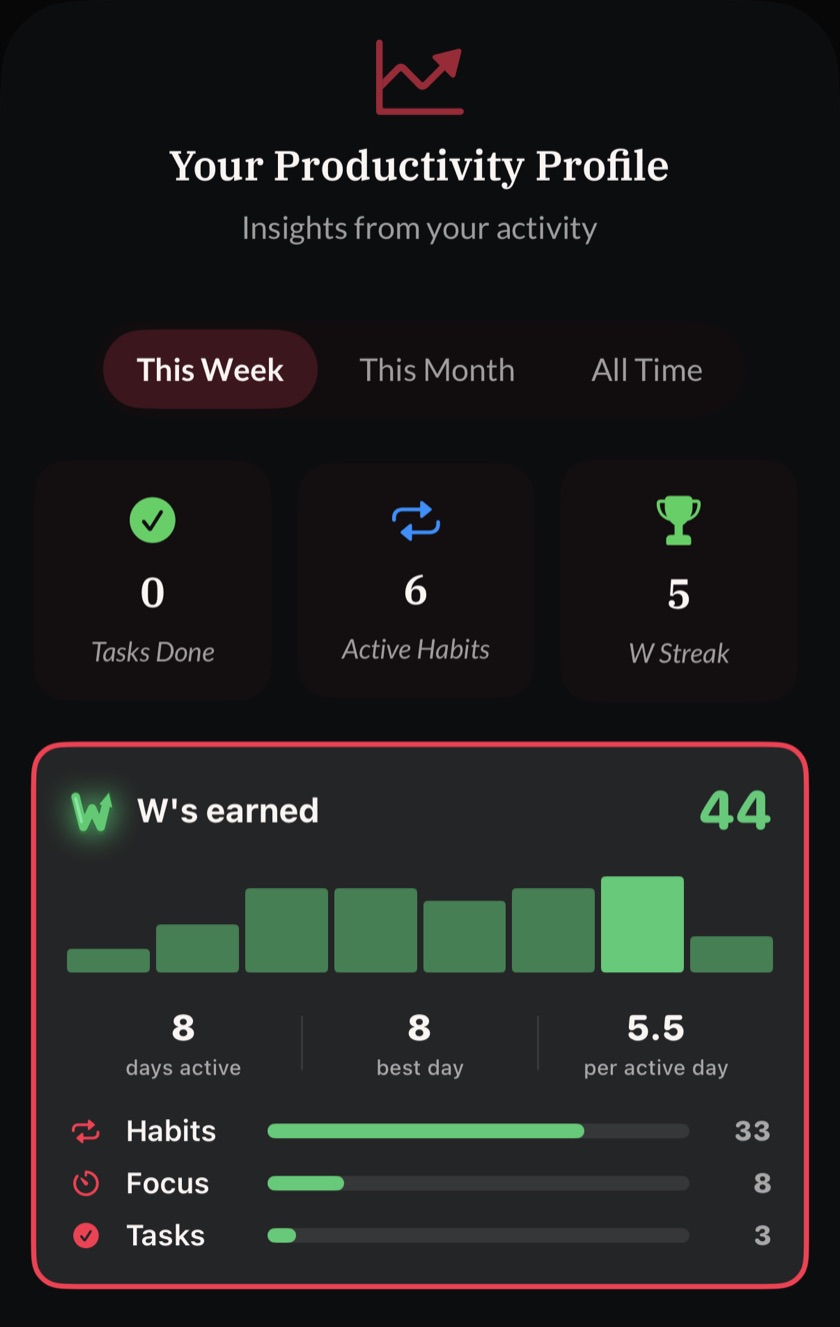
This is where tools designed for intentional living can help. An app like Vincere can become your partner in this shift. You can set up "Do" habits like "Read 10 pages" or "Take a 5-minute walk" and "Don't" habits like "No phone 30 mins before bed." When you check off a win, you earn a "W" – a tangible sign of your progress that replaces the invisible drain of wasted time. You can even use its built-in App Blocker to help you stay focused during important tasks or to enforce those "no-phone" times. For those who want more structured support, Vince, the AI coach, can help you plan your week to include more of what truly matters to you, offering prompts and check-ins to keep you on track.
The journey from passive consumption to intentional living is a series of small, brave choices. Each time you choose a micro-win over a mindless scroll, you're not just saving a few minutes; you're investing in the life you truly want to live.
If you're still feeling overwhelmed by the thought of where to start, you might find solace in our article, Why Am I Wasting My Life? How to Break the Spiral Today. Remember, even the smallest step forward is progress.
 On a computer? Scan with your iPhone camera.