 Vincere
It is 11:43 p.m., the room is dark, and the blue light of your screen is searing your retinas. Your body feels like lead, your eyes ache, and yet your thumb keeps flicking upward. You are not even enjoying what you are reading. You are just watching strangers reorganize their pantries or arguing in comment sections you will forget by morning.
Beneath the scroll sits a quiet, heavy knot: If I go to sleep now, tomorrow arrives immediately.
Psychologists call this revenge bedtime procrastination, but that label feels too academic for what it actually is. It is grief for your own day. When work, family, commuting, and errands eat every waking hour from sunrise onward, late at night is the only time nobody wants anything from you. Surrendering that sliver of freedom to sleep feels like conceding defeat. So you stay awake, trading tomorrow’s peace for twenty more minutes of mindless numbing—and then wake up groggy, hurried, and ashamed.
Most online advice makes this worse. You search for an evening habit and find an aesthetic checklist: brew chamomile in hand-thrown ceramics, do twenty minutes of yin yoga, apply six layers of serums, journal under soft red lighting.
When you are already depleted, that is not self-care. It is just another to-do list you are failing.
You do not need an elaborate lifestyle overhaul to sleep well. You need a gentle, low-demand night routine list that protects your nervous system and closes the day with kindness.
Why Complicated Evening Routines Fail
When you are emotionally spent, willpower does not exist. Your brain is locked in decision fatigue. Expecting yourself to execute an ambitious eight-step program at 10:00 p.m. sets off the familiar all-or-nothing trap: if you cannot do the whole luxury ritual, you do none of it and collapse into bed clutching your phone.
A real evening routine does not exist to make you more productive tomorrow. Its only job is to signal to your body that the shift is over. You are off the clock. You are safe enough to power down.
If you are overwhelmed and overstimulated, you cannot flip a switch from sprint to deep slumber. You need an off-ramp.
Here is a realistic, flexible checklist built for real human beings with finite energy.
Dock your phone across the room tonight, log your evening win in Vincere, and let tomorrow wake up to a rested mind.
Try Vincere free Scan with
your iPhone
The Low-Friction Night Routine List
Think of this list as an order of operations rather than strict rules. Some nights you will do all five; some nights you will only manage two. Both are acceptable.
[ ] 1. The 3-Minute Brain Dump (Evict the Mental Clutter)
[ ] 2. The Kitchen Reset (Give Tomorrow a Fighting Chance)
[ ] 3. The Low-Pressure Skin & Body Rinse (Wash Away the Day)
[ ] 4. The Phone Eviction (Cut the Cord Before Bed)
[ ] 5. The Low-Stimulus Bridge (Give Your Mind an Easy Off-Ramp)
1. The 3-Minute Brain Dump
The dread that keeps you awake often masquerades as practical worry: Did I send that invoice? Don’t forget to buy milk. What time is that appointment?
When your thoughts stay untethered in your head, your brain treats them like active emergencies. Take a scrap of paper or a pocket notebook and scribble down every loose end circling your mind. Do not organize them. Do not turn them into beautiful bullet points. Just dump them out. Once a thought is trapped on paper, your nervous system can finally believe you will not lose it while you rest.
2. The Low-Effort Kitchen Reset
Waking up to a sink full of dirty pans and crusty mugs instantly floods your morning with behindness. But you do not need to deep-clean your kitchen at 10:30 p.m.
Pick one or two microscopic wins: * Run the dishwasher or wash three mugs. * Clear one patch of counter. * Set out a clean water glass for tomorrow.
Stop there. Leaving a single clean surface creates a visual sigh of relief the moment you walk into the kitchen tomorrow morning.
3. The Simplified Skin & Body Reset
Whether you love an intricate night routine skincare ritual or you dread washing your face, simplify the standard. When you are tired, a five-step serum stack feels like climbing a mountain.
Give yourself permission to do the bare minimum: warm water, a gentle cleanser, and a moisturizer. Brush your teeth. If you are parenting and running a night routine for kids, you know the exhaustion that follows bedtime stories and pajama battles. When it is finally your turn, treat your body with the same gentleness you offer a child: no harsh self-critique in the bathroom mirror, just warm water and clean skin.
4. Dock the Phone Out of Arm's Reach
This is the hardest step and the most essential. Your phone is engineered by teams of behavioral psychologists to prevent you from sleeping. If it rests on your mattress or your nightstand, your tired brain will reach for it the moment a difficult thought pops up.
Buy a ten-dollar basic alarm clock. Plug your phone into an outlet across the room, or better yet, in the hallway. If you use your phone for white noise or sleep stories, start the audio, place it face down across the room, and get into bed. Removing the physical option to scroll breaks the doom loop.
5. The Low-Stimulus Bridge
Going straight from high-speed stimulation to pitch-black silence often causes racing thoughts to roar louder. You need a bridge.
Keep something deeply neutral by your bed: * A paperback novel (preferably fiction, nothing about self-improvement or work). * A crossword or word search. * Soft instrumental music or brown noise.
Read until your eyelids feel heavy. When the urge to sleep arrives, close the book and turn off the lamp. No final check of work email. No checking whether someone replied to your text.
Adapting the List for Different Seasons of Life
No single checklist fits every household. The trick is scaling the friction to match your actual life:
- For busy women and caregivers: A night routine for women often gets crowded out by household logistics. If you carry the invisible load of planning lunches and managing family calendars, set an artificial "closing time." At 9:30 p.m., the home is officially closed. Unfinished chores can wait.
- For teens and younger girls: A night routine for girls often suffers from group chats and social media FOMO. Establish a shared charging dock outside the bedroom doors. Sleep is far more restorative when you do not wake up to late-night group drama buzzing on your pillow.
- On your absolute lowest-energy nights: Cut the list down to the non-negotiables: drink half a glass of water, brush your teeth, put the phone across the room. That is still an intentional finish to the day.
Share one simple bedtime boundary with a friend on Vincere and see how much easier it is to close the day together.
Get Vincere on the App StoreScan withyour iPhone
When Consistency Feels Impossible Alone
Most people abandon their night routines because doing them in secret makes slipping backward effortless. When no one knows whether you stayed up until 2:00 a.m. doomscrolling, it is easy to let the habit slide for weeks, sinking quietly into fatigue and self-blame.
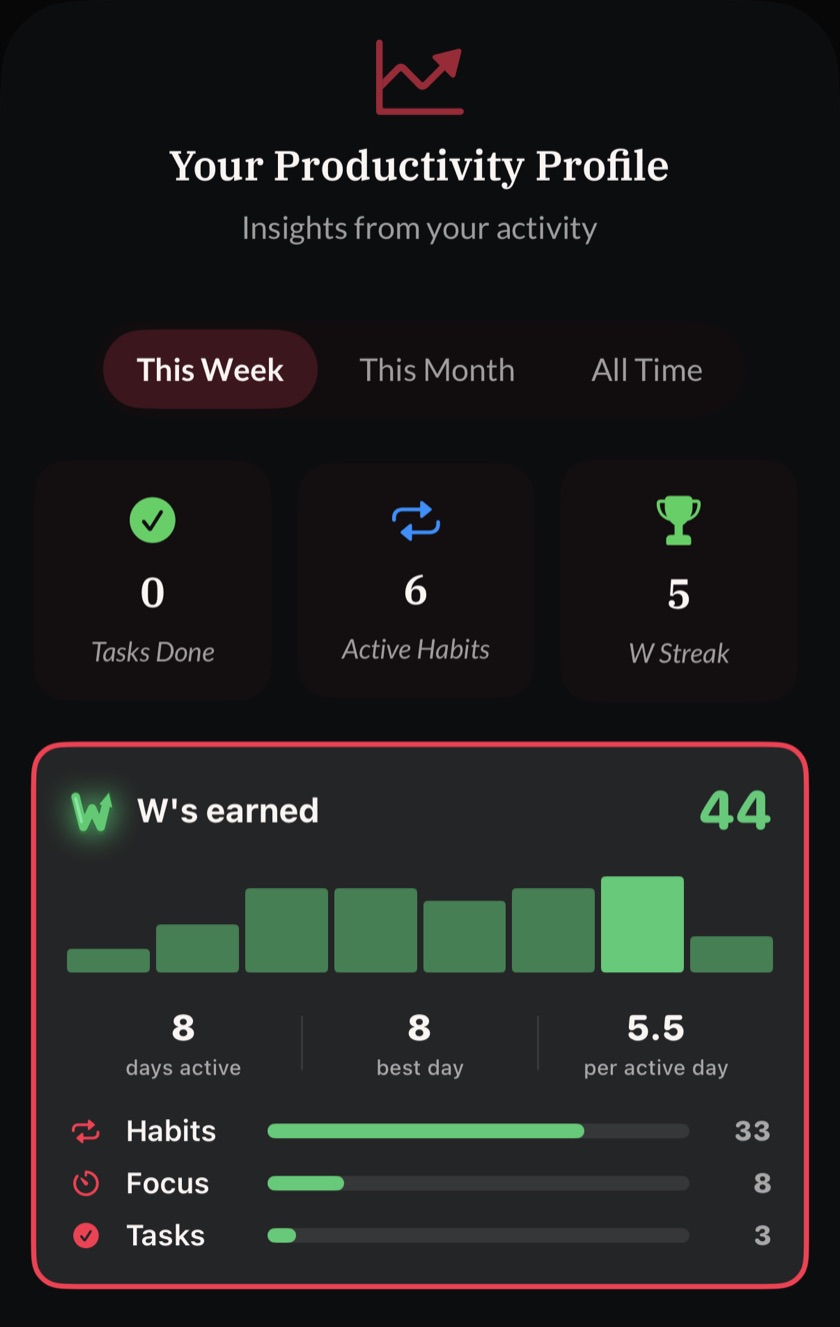
Accountability does not require public broadcasting. In Vincere, you can share a single evening habit—like "Phone docked by 10:30"—with one friend or partner. There are no social feeds, vanity metrics, or comment sections. You simply tap to mark your win, or snap a quick bedside photo to earn your proof. If you are struggling to build an evening rhythm, Vince, the built-in AI coach, can check in with you during your evening hours to ask how your wind-down is going. Knowing someone kind is quietly noticing your effort turns bedtime from a private struggle into shared momentum.
If you are tired of starting over, stop asking yourself to execute a flawless, aesthetic evening. A good night routine is not a performance. It is simply a gentle boundary around your rest. Tonight, pick just one item from this list, close the day on your own terms, and let yourself sleep.